Buy aefca.eu ?
We are moving the project
aefca.eu .
Are you interested in purchasing the domain
aefca.eu ?
domain@kv-gmbh.de · 0541-91531010
Buy aefca.eu ?
What is the difference between absolutism and enlightened absolutism?
Absolutism is a form of government where the ruler holds absolute power and authority, often justified by the divine right of kings. In absolutist regimes, the ruler's decisions are not subject to any kind of limitation or checks and balances. On the other hand, enlightened absolutism is a form of government where the ruler exercises absolute power but also incorporates Enlightenment principles such as rationality, tolerance, and progress. Enlightened absolutist rulers aimed to improve the lives of their subjects through reforms in areas such as education, justice, and economy, while still maintaining their absolute authority. **
What is absolutism?
Absolutism is a political theory that advocates for a single ruler, typically a monarch, who holds absolute power and authority over the government and the people. This form of government is characterized by centralized control, where the ruler has unchecked power and is not bound by a constitution or laws. Absolutism often involves the belief in the divine right of kings, where the monarch's authority is seen as coming directly from a higher power. This system of government was prevalent in Europe during the 17th and 18th centuries. **

Similar search terms for Absolutism
Top-Angebote
Products related to Absolutism:
-
The Readers Paradise Counseling Skills For Managers by Prof. N.K. Daniel - Paperback - Leadership, Coaching & Workplace Ethics Guide for Managers and HR ProfessionalsCounseling Skills For Managers is a practical guide that helps leaders develop essential counseling skills for the workplace. Written for managers, team leads, HR professionals, and aspiring executives, it covers foundational counseling theory and its strategic application in corporate settings. The book teaches readers how to listen with empathy, structure coaching conversations, resolve role conflicts, and support colleagues through change and difficulty, all while maintaining clear ethical boundaries. This guide is a valuable addition to any professional development or leadership library, offering a unique blend of psychology and management principles in an accessible format.2,99 £*Shipping: 2,99 £Secure redirect to the provider
-
Aporta Games Saltfjord Board Game - Dice Drafting - Village Development - Resource ManagementBuild a fishing village in northern Norway with Saltfjord, a strategic board game set at the end of the 19th century. Players develop their own settlement while making careful decisions about resources, buildings, trade, and technology. Use dice drafting to determine the actions available to you, then send your boat out to gather fish and expand the prosperity of your village. Construct new buildings, improve your capabilities, and discover technologies that can make everyday life more efficient. The game draws inspiration from the dice-drafting mechanisms of Santa Maria, while introducing its own setting, systems, and expanded gameplay. Each decision contributes to the direction of your settlement, giving players several ways to pursue success.45,21 £*Shipping: 3,95 £Secure redirect to the provider
-
Various Publishers How to Talk to Anyone, Next Conversation & Psychology of Management - 3 Book Paperback Set - Communication, Leadership & Management PsychologyThis 3-book collection set brings together three practical, people-focused reads for anyone who wants to communicate better and lead more effectively. Leil Lowndes' classic 'How to Talk to Anyone' pairs with Jefferson Fisher's 'Next Conversation' and a foundational 'Psychology of Management' title to cover everyday conversation, conflict resolution, and workplace psychology in one bundle. Whether you are prepping for interviews, managing a team, or simply want to feel more confident in social situations, this paperback set offers accessible, actionable guidance you can start using immediately. The set includes 'How to Talk to Anyone' by Leil Lowndes, 'Next Conversation' by Jefferson Fisher, and 'Psychology of Management'.20,99 £*Shipping: 2,99 £Secure redirect to the provider




-
What is confessional absolutism?
Confessional absolutism is the belief that one's own religious or moral beliefs are the only true and correct ones, and that all other beliefs are false or invalid. This ideology often leads to a strict adherence to one's own beliefs and a refusal to consider or accept any alternative viewpoints. Confessional absolutism can result in intolerance, close-mindedness, and a lack of willingness to engage in dialogue or compromise with those who hold different beliefs. **
-
What is war absolutism?
War absolutism is the belief that war is a legitimate and necessary tool for achieving a nation's goals, and that it should be pursued without limitations or constraints. This ideology holds that military force is the ultimate means of achieving political objectives, and that it should be used decisively and aggressively. War absolutism often rejects the idea of diplomacy and compromise, and instead prioritizes the use of force to achieve a nation's interests. **
-
What is enlightened absolutism?
Enlightened absolutism was a form of government in the 18th century in which absolute monarchs sought to use their power to bring about social and political reforms inspired by the Enlightenment ideals of reason, progress, and tolerance. These monarchs, such as Frederick the Great of Prussia and Catherine the Great of Russia, aimed to centralize their authority while also implementing policies to improve the welfare of their subjects, such as religious tolerance, legal reforms, and economic development. However, despite these efforts, the ultimate goal of enlightened absolutism was to strengthen the power and authority of the monarch. **
-
What is princely absolutism?
Princely absolutism refers to a form of government in which a monarch holds absolute power and authority over their realm. This system of governance emerged in Europe during the early modern period, particularly in states where powerful monarchs sought to centralize control and limit the influence of nobles and other competing power structures. Princely absolutism was characterized by the concentration of political, military, and economic power in the hands of the monarch, often at the expense of traditional feudal institutions. This form of governance was prevalent in countries such as France, Spain, and Russia during the 16th to 18th centuries. **


What does absolutism mean?
Absolutism refers to a form of government in which a single ruler, usually a monarch, holds absolute power and authority over the state and its people. This means that the ruler has unchecked power and is not bound by any laws or institutions, allowing them to make decisions and enforce their will without any limitations. Absolutist rulers often justified their power through the concept of divine right, claiming that they were chosen by God to rule and that their authority was absolute and unquestionable. This form of government was prevalent in Europe during the 17th and 18th centuries. **
What is absolutism in history?
Absolutism in history refers to a form of government where a single ruler, typically a monarch, holds absolute power and authority over the state and its people. This system of governance emerged in Europe during the 17th and 18th centuries, with rulers claiming divine right to rule and making decisions without the need for approval from a parliament or other governing body. Absolutist monarchs sought to centralize power, control the nobility, and impose their will on all aspects of society, often leading to increased state control and limited individual freedoms. **
Top-Angebote
Products related to Absolutism:
-
Perfect Picks Market Geometric Building Blocks Set For Kids Early Education Intelligence Development Toy Geometric Building Blocks Set For Kids Early Education Intelligence Development ToyUnlock your child's potential with this early education equipment designed to stimulate creativity and intelligence! This geometric set is the perfect building block toy for boys, helping to develop problemsolving skills while having fun. The...35,97 $*Shipping: 0,00 $Secure redirect to the provider
-
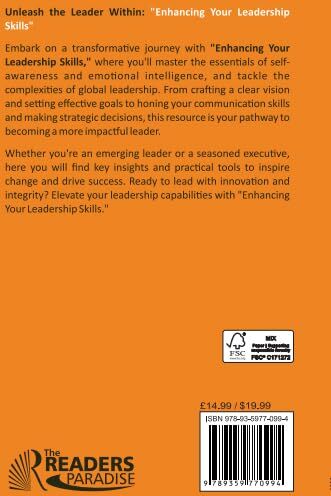
The Readers Paradise Enhancing Your Leadership Skills: A Practical Handbook for Success by Prof. V.K.Simon - Non Fiction Paperback - Leadership & Professional DevelopmentEnhance your leadership skills with this practical handbook by Prof. V.K.Simon. Written for anyone looking to lead with confidence and clarity, it blends self-awareness, emotional intelligence, and real-world strategy to help you achieve success. Whether you're a first-time manager or a seasoned executive, this compact guide delivers tools to strengthen decision-making, communication, and team impact in a fast-changing global workplace. It's built around the idea that great leadership is learned through practice, not theory alone, and covers the core competencies every effective leader needs, starting with self-awareness and emotional intelligence.2,99 £*Shipping: 2,99 £Secure redirect to the provider
-
The Readers Paradise Counseling Skills For Managers by Prof. N.K. Daniel - Paperback - Leadership, Coaching & Workplace Ethics Guide for Managers and HR ProfessionalsCounseling Skills For Managers is a practical guide that helps leaders develop essential counseling skills for the workplace. Written for managers, team leads, HR professionals, and aspiring executives, it covers foundational counseling theory and its strategic application in corporate settings. The book teaches readers how to listen with empathy, structure coaching conversations, resolve role conflicts, and support colleagues through change and difficulty, all while maintaining clear ethical boundaries. This guide is a valuable addition to any professional development or leadership library, offering a unique blend of psychology and management principles in an accessible format.2,99 £*Shipping: 2,99 £Secure redirect to the provider
-
Aporta Games Saltfjord Board Game - Dice Drafting - Village Development - Resource ManagementBuild a fishing village in northern Norway with Saltfjord, a strategic board game set at the end of the 19th century. Players develop their own settlement while making careful decisions about resources, buildings, trade, and technology. Use dice drafting to determine the actions available to you, then send your boat out to gather fish and expand the prosperity of your village. Construct new buildings, improve your capabilities, and discover technologies that can make everyday life more efficient. The game draws inspiration from the dice-drafting mechanisms of Santa Maria, while introducing its own setting, systems, and expanded gameplay. Each decision contributes to the direction of your settlement, giving players several ways to pursue success.45,21 £*Shipping: 3,95 £Secure redirect to the provider
-
What is the difference between absolutism and enlightened absolutism?
Absolutism is a form of government where the ruler holds absolute power and authority, often justified by the divine right of kings. In absolutist regimes, the ruler's decisions are not subject to any kind of limitation or checks and balances. On the other hand, enlightened absolutism is a form of government where the ruler exercises absolute power but also incorporates Enlightenment principles such as rationality, tolerance, and progress. Enlightened absolutist rulers aimed to improve the lives of their subjects through reforms in areas such as education, justice, and economy, while still maintaining their absolute authority. **
-
What is absolutism?
Absolutism is a political theory that advocates for a single ruler, typically a monarch, who holds absolute power and authority over the government and the people. This form of government is characterized by centralized control, where the ruler has unchecked power and is not bound by a constitution or laws. Absolutism often involves the belief in the divine right of kings, where the monarch's authority is seen as coming directly from a higher power. This system of government was prevalent in Europe during the 17th and 18th centuries. **
-
What is confessional absolutism?
Confessional absolutism is the belief that one's own religious or moral beliefs are the only true and correct ones, and that all other beliefs are false or invalid. This ideology often leads to a strict adherence to one's own beliefs and a refusal to consider or accept any alternative viewpoints. Confessional absolutism can result in intolerance, close-mindedness, and a lack of willingness to engage in dialogue or compromise with those who hold different beliefs. **
-
What is war absolutism?
War absolutism is the belief that war is a legitimate and necessary tool for achieving a nation's goals, and that it should be pursued without limitations or constraints. This ideology holds that military force is the ultimate means of achieving political objectives, and that it should be used decisively and aggressively. War absolutism often rejects the idea of diplomacy and compromise, and instead prioritizes the use of force to achieve a nation's interests. **
Similar search terms for Absolutism
-
Various Publishers How to Talk to Anyone, Next Conversation & Psychology of Management - 3 Book Paperback Set - Communication, Leadership & Management PsychologyThis 3-book collection set brings together three practical, people-focused reads for anyone who wants to communicate better and lead more effectively. Leil Lowndes' classic 'How to Talk to Anyone' pairs with Jefferson Fisher's 'Next Conversation' and a foundational 'Psychology of Management' title to cover everyday conversation, conflict resolution, and workplace psychology in one bundle. Whether you are prepping for interviews, managing a team, or simply want to feel more confident in social situations, this paperback set offers accessible, actionable guidance you can start using immediately. The set includes 'How to Talk to Anyone' by Leil Lowndes, 'Next Conversation' by Jefferson Fisher, and 'Psychology of Management'.20,99 £*Shipping: 2,99 £Secure redirect to the provider
-
Pan Macmillan Radical Candor by Kim Scott The Bestselling Leadership Book - Management, Feedback & Workplace Culture BookRadical Candor by Kim Scott is a groundbreaking leadership and communication guide that teaches how to give feedback effectively, build trust, and create high-performing teams without becoming harsh—or avoiding difficult conversations. Based on Scott’s experience at Google, Apple and Silicon Valley startups, Radical Candor introduces a simple but powerful framework built on two pillars: Care Personally Challenge Directly The book provides practical tools for giving honest feedback, fostering open communication, strengthening working relationships, and becoming a more compassionate and impactful leader. Perfect for managers, team leaders, HR professionals, and anyone wanting to build a healthy, productive workplace culture. Radical Candor is the perfect handbook for those who are looking to find meaning in their job and create an environment where people love both their work and their colleagues, and are motivated to strive to ever greater success.2,99 £*Shipping: 1,99 £Secure redirect to the provider
-
What is enlightened absolutism?
Enlightened absolutism was a form of government in the 18th century in which absolute monarchs sought to use their power to bring about social and political reforms inspired by the Enlightenment ideals of reason, progress, and tolerance. These monarchs, such as Frederick the Great of Prussia and Catherine the Great of Russia, aimed to centralize their authority while also implementing policies to improve the welfare of their subjects, such as religious tolerance, legal reforms, and economic development. However, despite these efforts, the ultimate goal of enlightened absolutism was to strengthen the power and authority of the monarch. **
-
What is princely absolutism?
Princely absolutism refers to a form of government in which a monarch holds absolute power and authority over their realm. This system of governance emerged in Europe during the early modern period, particularly in states where powerful monarchs sought to centralize control and limit the influence of nobles and other competing power structures. Princely absolutism was characterized by the concentration of political, military, and economic power in the hands of the monarch, often at the expense of traditional feudal institutions. This form of governance was prevalent in countries such as France, Spain, and Russia during the 16th to 18th centuries. **
-
What does absolutism mean?
Absolutism refers to a form of government in which a single ruler, usually a monarch, holds absolute power and authority over the state and its people. This means that the ruler has unchecked power and is not bound by any laws or institutions, allowing them to make decisions and enforce their will without any limitations. Absolutist rulers often justified their power through the concept of divine right, claiming that they were chosen by God to rule and that their authority was absolute and unquestionable. This form of government was prevalent in Europe during the 17th and 18th centuries. **
-
What is absolutism in history?
Absolutism in history refers to a form of government where a single ruler, typically a monarch, holds absolute power and authority over the state and its people. This system of governance emerged in Europe during the 17th and 18th centuries, with rulers claiming divine right to rule and making decisions without the need for approval from a parliament or other governing body. Absolutist monarchs sought to centralize power, control the nobility, and impose their will on all aspects of society, often leading to increased state control and limited individual freedoms. **
* All prices are inclusive of VAT and, if applicable, plus shipping costs. The offer information is based on the details provided by the respective shop and is updated through automated processes. Real-time updates do not occur, so deviations can occur in individual cases. ** Note: Parts of this content were created by AI.