Buy aefca.eu ?
We are moving the project
aefca.eu .
Are you interested in purchasing the domain
aefca.eu ?
domain@kv-gmbh.de · 0541-91531010
Buy aefca.eu ?
What is altruism?
Altruism is the selfless concern for the well-being of others. It involves acting in ways that benefit others without expecting anything in return. Altruistic actions are motivated by a genuine desire to help others and make a positive impact on their lives. This can include acts of kindness, generosity, and compassion towards others, even at the expense of one's own well-being. **
Is there altruism?
Altruism is the belief in or practice of selfless concern for the well-being of others. While some argue that true altruism does not exist because all actions are ultimately self-serving, others believe that genuine altruism is possible. There are numerous examples of people performing acts of kindness and generosity without any expectation of personal gain, suggesting that altruism does indeed exist. Ultimately, the debate over the existence of altruism is complex and may depend on one's perspective and interpretation of human behavior. **


Similar search terms for Altruism
Top-Angebote
Products related to Altruism:
-
Dr William MacAskill | Doing Good Better: Effective Altruism and a Radical New Way to Make a Difference by Dr William MacAskillDescription. Most of us want to make a difference. We donate to charity, buy Fairtrade coffee, or try to cut down on our carbon emissions. Rarely do we know if we're really helping, and despite our best intentions, our actions can have ineffective ― and sometimes downright harmful ― outcomes. Confronting this problem, William MacAskill developed the concept of effective altruism, a practical, data-driven approach which shows that each of us has the power to do an astonishing amount of good, given the right information. His conclusions are often surprising; by examining the charities we give to, the goods we buy and the careers we pursue, Doing Good Better is a fascinating and original guide which shows how, through simple actions, you can improve thousands of lives ― including your own.. Title. Doing Good Better: Effective Altruism and a Radical New Way to Make a Difference by Dr William MacAskill. Delivery. Content. Reviews8,99 £*Shipping: 2,99 £Secure redirect to the provider
-
Faber Doing Good Better: Effective Altruism and a Radical New Way to Make a Difference by Dr William MacAskill - Paperback - Non Fiction - EffectiveDoing Good Better by Dr William MacAskill is a landmark work of popular philosophy that founded the effective altruism movement. Written for anyone who wants their charitable giving, career choices, or ethical consumer habits to have real, measurable impact, it replaces guesswork and good intentions with hard evidence and rigorous economic thinking. MacAskill, a young Oxford moral philosopher, uses vivid case studies to show why some well-meaning acts of generosity do little good, while others save lives at astonishingly low cost, offering readers a practical framework for maximising the difference they make. The book opens by questioning assumptions many of us hold about charity, volunteering and ethical shopping, showing through careful data analysis why intuition often leads us astray. MacAskill introduces the core toolkit of effective altruism, providing readers with a clear understanding of how to make a positive impact in the world.9,59 £*Shipping: 2,99 £Secure redirect to the provider
-
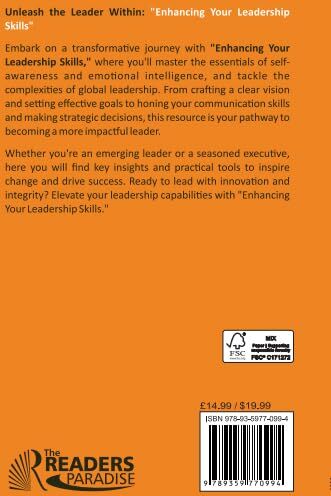
The Readers Paradise Enhancing Your Leadership Skills: A Practical Handbook for Success by Prof. V.K.Simon - Non Fiction Paperback - Leadership & Professional DevelopmentEnhance your leadership skills with this practical handbook by Prof. V.K.Simon. Written for anyone looking to lead with confidence and clarity, it blends self-awareness, emotional intelligence, and real-world strategy to help you achieve success. Whether you're a first-time manager or a seasoned executive, this compact guide delivers tools to strengthen decision-making, communication, and team impact in a fast-changing global workplace. It's built around the idea that great leadership is learned through practice, not theory alone, and covers the core competencies every effective leader needs, starting with self-awareness and emotional intelligence.2,99 £*Shipping: 2,99 £Secure redirect to the provider
-
Ludonova Coming of Age - Story-driven Development Dice Management Game - Board GameIn Coming of Age, players guide a character from childhood through adolescence, making choices that shape their interests, skills, personality, and future ambitions. Each player begins with a limited range of interests and abilities, then develops through experiences encountered during the game. Use a dice-management mechanism to decide where to go and which opportunities to pursue. Visits around the city introduce new experiences, while interactions and personal decisions influence the traits recorded on your individual player board. Along the way, you will form memories, make friends, fall in love, and learn to handle setbacks. The aim is to fulfill personal life goals by balancing development, independence, and the experiences that define your character. Parental support is important early in the journey, but your choices gradually open up new possibilities as you grow.45,99 £*Shipping: 3,95 £Secure redirect to the provider



-
What exactly is altruism?
Altruism is the selfless concern for the well-being of others, often leading to acts of kindness and generosity without expecting anything in return. It involves putting the needs and interests of others before one's own, with the intention of benefiting them. Altruistic behavior can range from simple acts of kindness, such as helping a stranger in need, to more significant sacrifices made for the greater good of society. **
-
What is better: Egoism or Altruism?
The debate between egoism and altruism is a complex one, as both have their own merits. Egoism emphasizes self-interest and the pursuit of one's own happiness and well-being, while altruism focuses on selflessness and concern for the welfare of others. Ultimately, a balance of both may be the most beneficial approach, as it is important to take care of oneself while also considering the needs and well-being of others. In certain situations, egoism may be more appropriate, while in others, altruism may be the better choice. It is important to consider the context and the potential impact on oneself and others when deciding which approach to prioritize. **
-
What are the disadvantages of altruism?
One disadvantage of altruism is the potential for exploitation or being taken advantage of by others who may not have the same altruistic intentions. Additionally, excessive altruism can lead to neglecting one's own needs and well-being, which can result in burnout or resentment. Altruism can also perpetuate a cycle of dependency in some situations, where individuals become reliant on the help of others rather than developing their own self-sufficiency. **
-
What would Kant say about effective altruism?
Kant would likely support the principles of effective altruism, as it aligns with his moral philosophy of duty and the categorical imperative. Effective altruism emphasizes the importance of using reason and evidence to determine the most effective ways to help others, which aligns with Kant's emphasis on using reason to determine moral duties. Additionally, effective altruism encourages individuals to act in ways that maximize the overall good for others, which is consistent with Kant's idea of acting in a way that respects the dignity and worth of all individuals. Overall, Kant would likely view effective altruism as a morally commendable approach to helping others. **

What do you think about effective altruism?
Effective altruism is a commendable approach to philanthropy that emphasizes using evidence and reason to determine the most effective ways to make a positive impact in the world. By focusing on maximizing the good that one can do with their resources, effective altruism seeks to address the most pressing global issues and make a meaningful difference in the lives of others. I believe that this mindset can lead to more impactful and sustainable change, and I admire the dedication of those who are committed to making a difference through effective altruism. **
Is there altruism or is it a myth?
Altruism, the act of selflessly helping others without expecting anything in return, is a complex concept that has been debated by philosophers, psychologists, and biologists. Some argue that all human behavior is ultimately self-serving, and that even seemingly altruistic acts are motivated by a desire for social approval or personal satisfaction. Others believe that genuine altruism does exist, and point to examples of individuals sacrificing their own well-being for the benefit of others as evidence. Ultimately, whether altruism is a myth or a genuine aspect of human nature is a matter of ongoing debate and may depend on individual perspectives and beliefs. **
Top-Angebote
Products related to Altruism:
-
Altruism: The Science and Psychology of Kindness by Matthieu Ricard - Non Fiction - PaperbackTitle:. Altruism: The Science and Psychology of Kindness by Matthieu Ricard Condition: BRAND NEW. Format: Paperback. ISBN: 9780857897015 Overview:. In a world grappling with division, inequality, and environmental challenges, Matthieu Ricard's "Altruism: The Science and Psychology of Kindness" emerges as a beacon of hope and actionable insight. This compelling non-fiction work delves into the profound impact of genuine concern for others, blending rigorous scientific research with ancient philosophical wisdom to explore how kindness can transform societies and individual lives. Ricard, drawing from his background in molecular biology and Buddhist philosophy, presents a comprehensive examination of altruism's roots, benefits, and practical applications. Spanning topics from neuroscientific studies on compassion to real-world examples of altruistic movements, the book argues that fostering kindness isn't just an ethical ideal—it's a practical solution to the pressing issues of our time. Readers will uncover how small acts of generosity can ripple into larger societal changes, addressing economic disparities, personal fulfillment, and long-term environmental sustainability. This paperback edition offers a readable, engaging narrative that's accessible yet intellectually stimulating, making it an essential read for those seeking to understand the psychology behind human goodness. At 700 pages, it's packed with evidence-based insights, case studies, and reflective exercises that encourage readers to integrate altruism into daily life, ultimately positioning this book as more than just a read—it's a guide to building a kinder world. Whether you're drawn to the science of positive psychology or the philosophical underpinnings of ethical living, Ricard's work highlights why investing in this book means investing in personal and global betterment. What Makes This Book Stand Out:. What truly sets "Altruism" apart in the crowded field of self-help and psychology books is its masterful synthesis of diverse disciplines, creating a narrative that's both intellectually rigorous and emotionally resonant. Ricard doesn't merely preach kindness; he backs it with cutting-edge research from neuroscience, evolutionary biology, and social sciences, revealing how altruistic behaviors are hardwired into our brains and societies. The book's exploration of themes like the neuroplasticity of compassion—how regular acts of kindness can rewire neural pathways for greater empathy—offers readers a fresh, science-backed perspective that's often missing from more anecdotal titles. Its tone is warm and optimistic, yet grounded, weaving in personal anecdotes from Ricard's life as a monk and scientist to make complex ideas relatable and inspiring. Unlike typical psychology texts that focus solely on individual benefits, this book emphasizes collective impact, showing how altruism can tackle global issues like climate change and social inequality through movements and policy changes....10,49 £*Shipping: 2,99 £Secure redirect to the provider
-
John Murray Business Coaching For Performance 6th Edition: The Principles And Practice Of Coaching And Leadership - Non FictionTitle:. Coaching For Performance 6th Edition: The Principles And Practice Of Coaching And Leadership Overview:. Unlock the full potential of your team with this essential guide to professional coaching. John Whitmore’s text delivers a clear roadmap for improving results. You will learn to ask powerful questions that spark independent thinking. The pages walk you through real-world scenarios to build trust. Every chapter offers actionable steps to foster accountability. You discover how to balance high expectations with genuine support. This updated guide keeps core principles sharp for modern workplaces. It bridges the gap between theory and daily practice. You gain the tools to navigate complex conversations confidently. Your leadership journey starts with a structured path forward. This authoritative text transforms how you approach daily challenges. You stop guessing and start implementing proven methodologies. Your conversations become less stressful and far more productive. What Makes This Book Stand Out:. What sets this title apart is its laser focus on human potential. Instead of offering generic advice, it teaches you how to ignite internal motivation. The widely recognised GROW framework serves as a reliable backbone for every session. You receive concrete techniques for managing resistance at work. The writing remains direct and accessible. You get deep insight into psychological barriers that limit growth. Each lesson connects back to measurable outcomes. This approach cultivates a culture where feedback feels genuinely supportive. You keep returning to its pages for consistent leadership habits. The practical exercises help you track progress without getting bogged down. You watch reluctant employees transform into proactive problem solvers. Managing becomes easier when you shift from telling to asking. Who This Book Is Perfect For:. Managers looking to avoid micromanagement will find immediate value in these pages. Business owners apply these strategies to accelerate team productivity quickly. Human resources professionals appreciate the clear guidelines for one-to-one meetings. Aspiring life coaches benefit from the foundational psychological groundwork. Students studying organisational psychology recognize this as a crucial reference point. Anyone who guides others forward can sharpen their interpersonal skills daily. The guidance works equally well for managing remote or hybrid teams.. You do not need prior training to implement these tactics successfully. The logical structure allows you to dip in for current solutions. Corporate training coordinators frequently adopt this manual as their primary classroom resource. Senior executives use it to recalibrate boardroom dynamics and drive alignment. Key Highlights:. Empowerment Strategy: Learn to replace directives with questions that unlock employee decision-making.. GROW Framework: Master a four-step system for structuring productive development conversations.. Psychological...24,99 £*Shipping: 2,99 £Secure redirect to the provider
-
Dr William MacAskill | Doing Good Better: Effective Altruism and a Radical New Way to Make a Difference by Dr William MacAskillDescription. Most of us want to make a difference. We donate to charity, buy Fairtrade coffee, or try to cut down on our carbon emissions. Rarely do we know if we're really helping, and despite our best intentions, our actions can have ineffective ― and sometimes downright harmful ― outcomes. Confronting this problem, William MacAskill developed the concept of effective altruism, a practical, data-driven approach which shows that each of us has the power to do an astonishing amount of good, given the right information. His conclusions are often surprising; by examining the charities we give to, the goods we buy and the careers we pursue, Doing Good Better is a fascinating and original guide which shows how, through simple actions, you can improve thousands of lives ― including your own.. Title. Doing Good Better: Effective Altruism and a Radical New Way to Make a Difference by Dr William MacAskill. Delivery. Content. Reviews8,99 £*Shipping: 2,99 £Secure redirect to the provider
-
Faber Doing Good Better: Effective Altruism and a Radical New Way to Make a Difference by Dr William MacAskill - Paperback - Non Fiction - EffectiveDoing Good Better by Dr William MacAskill is a landmark work of popular philosophy that founded the effective altruism movement. Written for anyone who wants their charitable giving, career choices, or ethical consumer habits to have real, measurable impact, it replaces guesswork and good intentions with hard evidence and rigorous economic thinking. MacAskill, a young Oxford moral philosopher, uses vivid case studies to show why some well-meaning acts of generosity do little good, while others save lives at astonishingly low cost, offering readers a practical framework for maximising the difference they make. The book opens by questioning assumptions many of us hold about charity, volunteering and ethical shopping, showing through careful data analysis why intuition often leads us astray. MacAskill introduces the core toolkit of effective altruism, providing readers with a clear understanding of how to make a positive impact in the world.9,59 £*Shipping: 2,99 £Secure redirect to the provider
-
What is altruism?
Altruism is the selfless concern for the well-being of others. It involves acting in ways that benefit others without expecting anything in return. Altruistic actions are motivated by a genuine desire to help others and make a positive impact on their lives. This can include acts of kindness, generosity, and compassion towards others, even at the expense of one's own well-being. **
-
Is there altruism?
Altruism is the belief in or practice of selfless concern for the well-being of others. While some argue that true altruism does not exist because all actions are ultimately self-serving, others believe that genuine altruism is possible. There are numerous examples of people performing acts of kindness and generosity without any expectation of personal gain, suggesting that altruism does indeed exist. Ultimately, the debate over the existence of altruism is complex and may depend on one's perspective and interpretation of human behavior. **
-
What exactly is altruism?
Altruism is the selfless concern for the well-being of others, often leading to acts of kindness and generosity without expecting anything in return. It involves putting the needs and interests of others before one's own, with the intention of benefiting them. Altruistic behavior can range from simple acts of kindness, such as helping a stranger in need, to more significant sacrifices made for the greater good of society. **
-
What is better: Egoism or Altruism?
The debate between egoism and altruism is a complex one, as both have their own merits. Egoism emphasizes self-interest and the pursuit of one's own happiness and well-being, while altruism focuses on selflessness and concern for the welfare of others. Ultimately, a balance of both may be the most beneficial approach, as it is important to take care of oneself while also considering the needs and well-being of others. In certain situations, egoism may be more appropriate, while in others, altruism may be the better choice. It is important to consider the context and the potential impact on oneself and others when deciding which approach to prioritize. **
Similar search terms for Altruism
-
The Readers Paradise Enhancing Your Leadership Skills: A Practical Handbook for Success by Prof. V.K.Simon - Non Fiction Paperback - Leadership & Professional DevelopmentEnhance your leadership skills with this practical handbook by Prof. V.K.Simon. Written for anyone looking to lead with confidence and clarity, it blends self-awareness, emotional intelligence, and real-world strategy to help you achieve success. Whether you're a first-time manager or a seasoned executive, this compact guide delivers tools to strengthen decision-making, communication, and team impact in a fast-changing global workplace. It's built around the idea that great leadership is learned through practice, not theory alone, and covers the core competencies every effective leader needs, starting with self-awareness and emotional intelligence.2,99 £*Shipping: 2,99 £Secure redirect to the provider
-
Ludonova Coming of Age - Story-driven Development Dice Management Game - Board GameIn Coming of Age, players guide a character from childhood through adolescence, making choices that shape their interests, skills, personality, and future ambitions. Each player begins with a limited range of interests and abilities, then develops through experiences encountered during the game. Use a dice-management mechanism to decide where to go and which opportunities to pursue. Visits around the city introduce new experiences, while interactions and personal decisions influence the traits recorded on your individual player board. Along the way, you will form memories, make friends, fall in love, and learn to handle setbacks. The aim is to fulfill personal life goals by balancing development, independence, and the experiences that define your character. Parental support is important early in the journey, but your choices gradually open up new possibilities as you grow.45,99 £*Shipping: 3,95 £Secure redirect to the provider
-
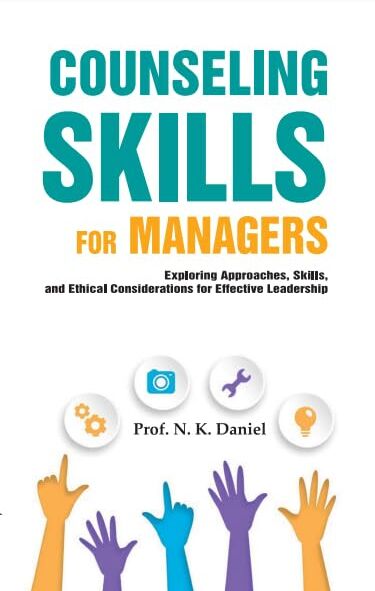
The Readers Paradise Counseling Skills For Managers by Prof. N.K. Daniel - Paperback - Leadership, Coaching & Workplace Ethics Guide for Managers and HR ProfessionalsCounseling Skills For Managers is a practical guide that helps leaders develop essential counseling skills for the workplace. Written for managers, team leads, HR professionals, and aspiring executives, it covers foundational counseling theory and its strategic application in corporate settings. The book teaches readers how to listen with empathy, structure coaching conversations, resolve role conflicts, and support colleagues through change and difficulty, all while maintaining clear ethical boundaries. This guide is a valuable addition to any professional development or leadership library, offering a unique blend of psychology and management principles in an accessible format.2,99 £*Shipping: 2,99 £Secure redirect to the provider
-
Various Publishers How to Talk to Anyone, Next Conversation & Psychology of Management - 3 Book Paperback Set - Communication, Leadership & Management PsychologyThis 3-book collection set brings together three practical, people-focused reads for anyone who wants to communicate better and lead more effectively. Leil Lowndes' classic 'How to Talk to Anyone' pairs with Jefferson Fisher's 'Next Conversation' and a foundational 'Psychology of Management' title to cover everyday conversation, conflict resolution, and workplace psychology in one bundle. Whether you are prepping for interviews, managing a team, or simply want to feel more confident in social situations, this paperback set offers accessible, actionable guidance you can start using immediately. The set includes 'How to Talk to Anyone' by Leil Lowndes, 'Next Conversation' by Jefferson Fisher, and 'Psychology of Management'.20,99 £*Shipping: 2,99 £Secure redirect to the provider
-
What are the disadvantages of altruism?
One disadvantage of altruism is the potential for exploitation or being taken advantage of by others who may not have the same altruistic intentions. Additionally, excessive altruism can lead to neglecting one's own needs and well-being, which can result in burnout or resentment. Altruism can also perpetuate a cycle of dependency in some situations, where individuals become reliant on the help of others rather than developing their own self-sufficiency. **
-
What would Kant say about effective altruism?
Kant would likely support the principles of effective altruism, as it aligns with his moral philosophy of duty and the categorical imperative. Effective altruism emphasizes the importance of using reason and evidence to determine the most effective ways to help others, which aligns with Kant's emphasis on using reason to determine moral duties. Additionally, effective altruism encourages individuals to act in ways that maximize the overall good for others, which is consistent with Kant's idea of acting in a way that respects the dignity and worth of all individuals. Overall, Kant would likely view effective altruism as a morally commendable approach to helping others. **
-
What do you think about effective altruism?
Effective altruism is a commendable approach to philanthropy that emphasizes using evidence and reason to determine the most effective ways to make a positive impact in the world. By focusing on maximizing the good that one can do with their resources, effective altruism seeks to address the most pressing global issues and make a meaningful difference in the lives of others. I believe that this mindset can lead to more impactful and sustainable change, and I admire the dedication of those who are committed to making a difference through effective altruism. **
-
Is there altruism or is it a myth?
Altruism, the act of selflessly helping others without expecting anything in return, is a complex concept that has been debated by philosophers, psychologists, and biologists. Some argue that all human behavior is ultimately self-serving, and that even seemingly altruistic acts are motivated by a desire for social approval or personal satisfaction. Others believe that genuine altruism does exist, and point to examples of individuals sacrificing their own well-being for the benefit of others as evidence. Ultimately, whether altruism is a myth or a genuine aspect of human nature is a matter of ongoing debate and may depend on individual perspectives and beliefs. **
* All prices are inclusive of VAT and, if applicable, plus shipping costs. The offer information is based on the details provided by the respective shop and is updated through automated processes. Real-time updates do not occur, so deviations can occur in individual cases. ** Note: Parts of this content were created by AI.