Buy aefca.eu ?
We are moving the project
aefca.eu .
Are you interested in purchasing the domain
aefca.eu ?
domain@kv-gmbh.de · 0541-91531010
Buy aefca.eu ?
Why do galaxies rotate?
Galaxies rotate due to the conservation of angular momentum. As the gas and dust that make up a galaxy collapse under gravity to form stars and other structures, any initial rotation present in the material is amplified. This rotation causes the galaxy to spin around its center of mass. The rotation of galaxies also helps to maintain their overall shape and stability. **
Why are galaxies flat?
Galaxies are flat because of the way they form and rotate. When galaxies form, the gas and dust that make them up collapse into a spinning disk shape due to the conservation of angular momentum. This spinning motion causes the material to flatten out into a disk, much like how pizza dough flattens out when spun. The gravitational forces within the galaxy also contribute to this flat shape, as they pull the material towards the center of the galaxy, further flattening it out. **


Similar search terms for Galaxies
Top-Angebote
Products related to Galaxies:
-
Tiny Epic Galaxies Player Dice for Gamers, Official Accessory by Gamelyn Games, Ages 10+Expand your Tiny Epic Galaxies sessions with this set of player dice from Gamelyn Games. Designed for use with the Tiny Epic Galaxies tabletop game, these dice provide replacement or additional components for players who want to refresh their game set. The dice are supplied as a dedicated accessory pack and are intended for tabletop play rather than as a standalone game. They are suitable for owners of Tiny Epic Galaxies and may be useful when replacing missing or worn components, subject to compatibility with the relevant edition. This product is an official accessory and does not include the complete Tiny Epic Galaxies board game. Manufacturer: Gamelyn Games.15,49 £*Shipping: 3,95 £Secure redirect to the provider
-
Perfect Picks Market Geometric Building Blocks Set For Kids Early Education Intelligence Development Toy Geometric Building Blocks Set For Kids Early Education Intelligence Development ToyUnlock your child's potential with this early education equipment designed to stimulate creativity and intelligence! This geometric set is the perfect building block toy for boys, helping to develop problemsolving skills while having fun. The...35,97 $*Shipping: 0,00 $Secure redirect to the provider
-
The Readers Paradise Enhancing Your Leadership Skills: A Practical Handbook for Success by Prof. V.K.Simon - Non Fiction Paperback - Leadership & Professional DevelopmentEnhance your leadership skills with this practical handbook by Prof. V.K.Simon. Written for anyone looking to lead with confidence and clarity, it blends self-awareness, emotional intelligence, and real-world strategy to help you achieve success. Whether you're a first-time manager or a seasoned executive, this compact guide delivers tools to strengthen decision-making, communication, and team impact in a fast-changing global workplace. It's built around the idea that great leadership is learned through practice, not theory alone, and covers the core competencies every effective leader needs, starting with self-awareness and emotional intelligence.2,99 £*Shipping: 2,99 £Secure redirect to the provider
-
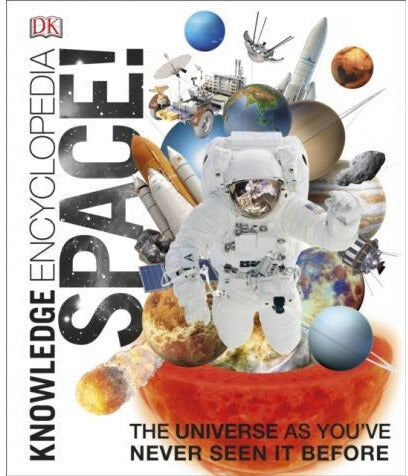
Dorling Kindersley DK Knowledge Encyclopedia Space The Ultimate Space & Astronomy Reference Guide for Kids and Families - Planets, Stars, Galaxies & the Universe ExplainExplore the wonders of the universe with the DK Knowledge Encyclopedia Space, an inspiring and visually stunning guide to outer space.Packed with high-definition photographs, 3D illustrations, infographics, facts, timelines, and scientific explanations, this encyclopedia takes readers on an unforgettable journey from Earth to the farthest reaches of the cosmos. Perfect for curious readers, young astronomers, and space enthusiasts, this book explains: The solar system, planets, moons, and dwarf planets Stars, nebulas, black holes, galaxies & cosmic phenomena Space exploration, astronauts & spacecraft The Big Bang, universe evolution & future missions The latest science discoveries explained in kid-friendly language A brilliant educational book for STEM learners, classrooms, home libraries, and children aged 8–14 who love space.9,99 £*Shipping: 2,99 £Secure redirect to the provider



-
What are spiral galaxies?
Spiral galaxies are a type of galaxy characterized by their distinctive spiral arms that extend outwards from a central bulge. These arms are made up of stars, gas, and dust, and they give the galaxy a pinwheel-like appearance. Spiral galaxies are often found to be relatively young and active, with ongoing star formation occurring in their arms. Our own Milky Way galaxy is a spiral galaxy. **
-
Are there other galaxies?
Yes, there are other galaxies besides our own Milky Way. Scientists estimate that there are billions of galaxies in the universe, each containing billions of stars. Some of the closest galaxies to us include the Andromeda Galaxy and the Triangulum Galaxy. The study of these other galaxies helps us understand the vastness and diversity of the universe. **
-
Why are galaxies disk-shaped?
Galaxies are disk-shaped because of the way they form and evolve. When galaxies form, the gas and dust that make them up collapse under gravity, and as they spin, they flatten out into a disk shape. This is due to the conservation of angular momentum, which causes the material to flatten into a spinning disk as it collapses. Over time, the gravitational forces within the galaxy also help to maintain this disk shape. Additionally, the presence of a supermassive black hole at the center of many galaxies can also contribute to the disk shape by influencing the motion of stars and gas within the galaxy. **
-
What do galaxies revolve around?
Galaxies do not revolve around a single point or object. Instead, galaxies are part of galaxy clusters, which are groups of galaxies bound together by gravity. These galaxy clusters can revolve around a common center of mass, which is determined by the combined gravitational forces of all the galaxies within the cluster. Additionally, galaxies themselves can also rotate around their own centers, with stars and other celestial bodies within the galaxies orbiting around the galactic center. **


Where can one see other galaxies?
Other galaxies can be seen from Earth using telescopes, both ground-based and space-based. Observatories such as the Hubble Space Telescope and the James Webb Space Telescope have provided stunning images of distant galaxies. Amateur astronomers can also observe other galaxies using smaller telescopes and even binoculars, especially in areas with low light pollution. Additionally, some planetariums and science centers offer programs and exhibits that showcase images and information about other galaxies. **
Are there really billions of galaxies?
Yes, there are billions of galaxies in the universe. Each galaxy can contain billions of stars, and there are estimated to be over 100 billion galaxies in the observable universe. The vastness of the universe is truly mind-boggling, with each galaxy containing its own unique set of stars, planets, and other celestial objects. The study of galaxies and their interactions is a key area of research in astronomy and astrophysics. **
Top-Angebote
Products related to Galaxies:
-
Antonina Vella Galaxies Blue WallpaperSculptural shapes create a universe of textural, raised, freeform silhouettes on modern color in pattern Galaxies. This Galaxies Wallpaper measures approximately 27 inches wide by 27 feet long, covering About 60.8 square feet per roll.187,00 $*Shipping: 0,00 $Secure redirect to the provider
-
Star Command Galaxies Steam CD KeyStar Command Galaxies: A Galactic Adventure Star Command Galaxies is a captivating real-time strategy and adventure game that immerses players in the role of a starship captain. Developed by Warballoon, this game offers a unique blend of management, exploration, and combat. Key features include: Ship Customization: Players can design and upgrade their starships, equipping them with various weapons, shields, and other enhancements. Crew Management: Build a loyal crew of officers and specialists, each with their own unique skills and personalities. Galactic Exploration: Embark on exciting journeys through a randomly generated universe, discovering new planets, trading with alien civilizations, and encountering unexpected challenges. Intense Battles: Engage in thrilling space battles against enemy ships, using strategic maneuvers and tactical decisions to outmaneuver and defeat your opponents. Retro Pixel Art: The game's charming pixel art style evokes a nostalgic feel while still delivering a visually stunning experience.2,11 £*Shipping: 0,00 £Secure redirect to the provider
-
Tiny Epic Galaxies Player Dice for Gamers, Official Accessory by Gamelyn Games, Ages 10+Expand your Tiny Epic Galaxies sessions with this set of player dice from Gamelyn Games. Designed for use with the Tiny Epic Galaxies tabletop game, these dice provide replacement or additional components for players who want to refresh their game set. The dice are supplied as a dedicated accessory pack and are intended for tabletop play rather than as a standalone game. They are suitable for owners of Tiny Epic Galaxies and may be useful when replacing missing or worn components, subject to compatibility with the relevant edition. This product is an official accessory and does not include the complete Tiny Epic Galaxies board game. Manufacturer: Gamelyn Games.15,49 £*Shipping: 3,95 £Secure redirect to the provider
-
Perfect Picks Market Geometric Building Blocks Set For Kids Early Education Intelligence Development Toy Geometric Building Blocks Set For Kids Early Education Intelligence Development ToyUnlock your child's potential with this early education equipment designed to stimulate creativity and intelligence! This geometric set is the perfect building block toy for boys, helping to develop problemsolving skills while having fun. The...35,97 $*Shipping: 0,00 $Secure redirect to the provider
-
Why do galaxies rotate?
Galaxies rotate due to the conservation of angular momentum. As the gas and dust that make up a galaxy collapse under gravity to form stars and other structures, any initial rotation present in the material is amplified. This rotation causes the galaxy to spin around its center of mass. The rotation of galaxies also helps to maintain their overall shape and stability. **
-
Why are galaxies flat?
Galaxies are flat because of the way they form and rotate. When galaxies form, the gas and dust that make them up collapse into a spinning disk shape due to the conservation of angular momentum. This spinning motion causes the material to flatten out into a disk, much like how pizza dough flattens out when spun. The gravitational forces within the galaxy also contribute to this flat shape, as they pull the material towards the center of the galaxy, further flattening it out. **
-
What are spiral galaxies?
Spiral galaxies are a type of galaxy characterized by their distinctive spiral arms that extend outwards from a central bulge. These arms are made up of stars, gas, and dust, and they give the galaxy a pinwheel-like appearance. Spiral galaxies are often found to be relatively young and active, with ongoing star formation occurring in their arms. Our own Milky Way galaxy is a spiral galaxy. **
-
Are there other galaxies?
Yes, there are other galaxies besides our own Milky Way. Scientists estimate that there are billions of galaxies in the universe, each containing billions of stars. Some of the closest galaxies to us include the Andromeda Galaxy and the Triangulum Galaxy. The study of these other galaxies helps us understand the vastness and diversity of the universe. **
Similar search terms for Galaxies
-
The Readers Paradise Enhancing Your Leadership Skills: A Practical Handbook for Success by Prof. V.K.Simon - Non Fiction Paperback - Leadership & Professional DevelopmentEnhance your leadership skills with this practical handbook by Prof. V.K.Simon. Written for anyone looking to lead with confidence and clarity, it blends self-awareness, emotional intelligence, and real-world strategy to help you achieve success. Whether you're a first-time manager or a seasoned executive, this compact guide delivers tools to strengthen decision-making, communication, and team impact in a fast-changing global workplace. It's built around the idea that great leadership is learned through practice, not theory alone, and covers the core competencies every effective leader needs, starting with self-awareness and emotional intelligence.2,99 £*Shipping: 2,99 £Secure redirect to the provider
-
Dorling Kindersley DK Knowledge Encyclopedia Space The Ultimate Space & Astronomy Reference Guide for Kids and Families - Planets, Stars, Galaxies & the Universe ExplainExplore the wonders of the universe with the DK Knowledge Encyclopedia Space, an inspiring and visually stunning guide to outer space.Packed with high-definition photographs, 3D illustrations, infographics, facts, timelines, and scientific explanations, this encyclopedia takes readers on an unforgettable journey from Earth to the farthest reaches of the cosmos. Perfect for curious readers, young astronomers, and space enthusiasts, this book explains: The solar system, planets, moons, and dwarf planets Stars, nebulas, black holes, galaxies & cosmic phenomena Space exploration, astronauts & spacecraft The Big Bang, universe evolution & future missions The latest science discoveries explained in kid-friendly language A brilliant educational book for STEM learners, classrooms, home libraries, and children aged 8–14 who love space.9,99 £*Shipping: 2,99 £Secure redirect to the provider
-
Various Publishers How to Talk to Anyone, Next Conversation & Psychology of Management - 3 Book Paperback Set - Communication, Leadership & Management PsychologyThis 3-book collection set brings together three practical, people-focused reads for anyone who wants to communicate better and lead more effectively. Leil Lowndes' classic 'How to Talk to Anyone' pairs with Jefferson Fisher's 'Next Conversation' and a foundational 'Psychology of Management' title to cover everyday conversation, conflict resolution, and workplace psychology in one bundle. Whether you are prepping for interviews, managing a team, or simply want to feel more confident in social situations, this paperback set offers accessible, actionable guidance you can start using immediately. The set includes 'How to Talk to Anyone' by Leil Lowndes, 'Next Conversation' by Jefferson Fisher, and 'Psychology of Management'.20,99 £*Shipping: 2,99 £Secure redirect to the provider
-
Antonina Vella Galaxies White WallpaperSculptural shapes create a universe of textural, raised, freeform silhouettes on modern color in pattern Galaxies. This Galaxies Wallpaper measures approximately 27 inches wide by 27 feet long, covering About 60.8 square feet per roll.187,00 $*Shipping: 0,00 $Secure redirect to the provider
-
Why are galaxies disk-shaped?
Galaxies are disk-shaped because of the way they form and evolve. When galaxies form, the gas and dust that make them up collapse under gravity, and as they spin, they flatten out into a disk shape. This is due to the conservation of angular momentum, which causes the material to flatten into a spinning disk as it collapses. Over time, the gravitational forces within the galaxy also help to maintain this disk shape. Additionally, the presence of a supermassive black hole at the center of many galaxies can also contribute to the disk shape by influencing the motion of stars and gas within the galaxy. **
-
What do galaxies revolve around?
Galaxies do not revolve around a single point or object. Instead, galaxies are part of galaxy clusters, which are groups of galaxies bound together by gravity. These galaxy clusters can revolve around a common center of mass, which is determined by the combined gravitational forces of all the galaxies within the cluster. Additionally, galaxies themselves can also rotate around their own centers, with stars and other celestial bodies within the galaxies orbiting around the galactic center. **
-
Where can one see other galaxies?
Other galaxies can be seen from Earth using telescopes, both ground-based and space-based. Observatories such as the Hubble Space Telescope and the James Webb Space Telescope have provided stunning images of distant galaxies. Amateur astronomers can also observe other galaxies using smaller telescopes and even binoculars, especially in areas with low light pollution. Additionally, some planetariums and science centers offer programs and exhibits that showcase images and information about other galaxies. **
-
Are there really billions of galaxies?
Yes, there are billions of galaxies in the universe. Each galaxy can contain billions of stars, and there are estimated to be over 100 billion galaxies in the observable universe. The vastness of the universe is truly mind-boggling, with each galaxy containing its own unique set of stars, planets, and other celestial objects. The study of galaxies and their interactions is a key area of research in astronomy and astrophysics. **
* All prices are inclusive of VAT and, if applicable, plus shipping costs. The offer information is based on the details provided by the respective shop and is updated through automated processes. Real-time updates do not occur, so deviations can occur in individual cases. ** Note: Parts of this content were created by AI.