Buy aefca.eu ?
We are moving the project
aefca.eu .
Are you interested in purchasing the domain
aefca.eu ?
domain@kv-gmbh.de · 0541-91531010
Buy aefca.eu ?
Are pets slaves?
No, pets are not considered slaves. While pets may rely on their owners for care and sustenance, they are not forced to work or serve their owners against their will. Pets are typically kept for companionship and are provided with a loving and safe environment by their owners. The relationship between pets and their owners is based on mutual affection and care, rather than exploitation or servitude. **
Are butlers slaves?
No, butlers are not slaves. They are hired employees who work in a domestic setting, typically in a large household or estate, and are responsible for managing the household and attending to the needs of the residents. While they may perform tasks that could be seen as servile, they are not owned by their employers and are compensated for their work. Butlers have a professional role and are expected to carry out their duties with professionalism and discretion. **

Similar search terms for Slaves
Top-Angebote
Products related to Slaves:
-
Various Publishers How to Talk to Anyone, Next Conversation & Psychology of Management - 3 Book Paperback Set - Communication, Leadership & Management PsychologyThis 3-book collection set brings together three practical, people-focused reads for anyone who wants to communicate better and lead more effectively. Leil Lowndes' classic 'How to Talk to Anyone' pairs with Jefferson Fisher's 'Next Conversation' and a foundational 'Psychology of Management' title to cover everyday conversation, conflict resolution, and workplace psychology in one bundle. Whether you are prepping for interviews, managing a team, or simply want to feel more confident in social situations, this paperback set offers accessible, actionable guidance you can start using immediately. The set includes 'How to Talk to Anyone' by Leil Lowndes, 'Next Conversation' by Jefferson Fisher, and 'Psychology of Management'.20,99 £*Shipping: 2,99 £Secure redirect to the provider
-
Pan Macmillan Radical Candor by Kim Scott The Bestselling Leadership Book - Management, Feedback & Workplace Culture BookRadical Candor by Kim Scott is a groundbreaking leadership and communication guide that teaches how to give feedback effectively, build trust, and create high-performing teams without becoming harsh—or avoiding difficult conversations. Based on Scott’s experience at Google, Apple and Silicon Valley startups, Radical Candor introduces a simple but powerful framework built on two pillars: Care Personally Challenge Directly The book provides practical tools for giving honest feedback, fostering open communication, strengthening working relationships, and becoming a more compassionate and impactful leader. Perfect for managers, team leaders, HR professionals, and anyone wanting to build a healthy, productive workplace culture. Radical Candor is the perfect handbook for those who are looking to find meaning in their job and create an environment where people love both their work and their colleagues, and are motivated to strive to ever greater success.2,99 £*Shipping: 1,99 £Secure redirect to the provider
-
The Readers Paradise Counseling Skills For Managers by Prof. N.K. Daniel - Paperback - Leadership, Coaching & Workplace Ethics Guide for Managers and HR ProfessionalsCounseling Skills For Managers is a practical guide that helps leaders develop essential counseling skills for the workplace. Written for managers, team leads, HR professionals, and aspiring executives, it covers foundational counseling theory and its strategic application in corporate settings. The book teaches readers how to listen with empathy, structure coaching conversations, resolve role conflicts, and support colleagues through change and difficulty, all while maintaining clear ethical boundaries. This guide is a valuable addition to any professional development or leadership library, offering a unique blend of psychology and management principles in an accessible format.2,99 £*Shipping: 2,99 £Secure redirect to the provider
-
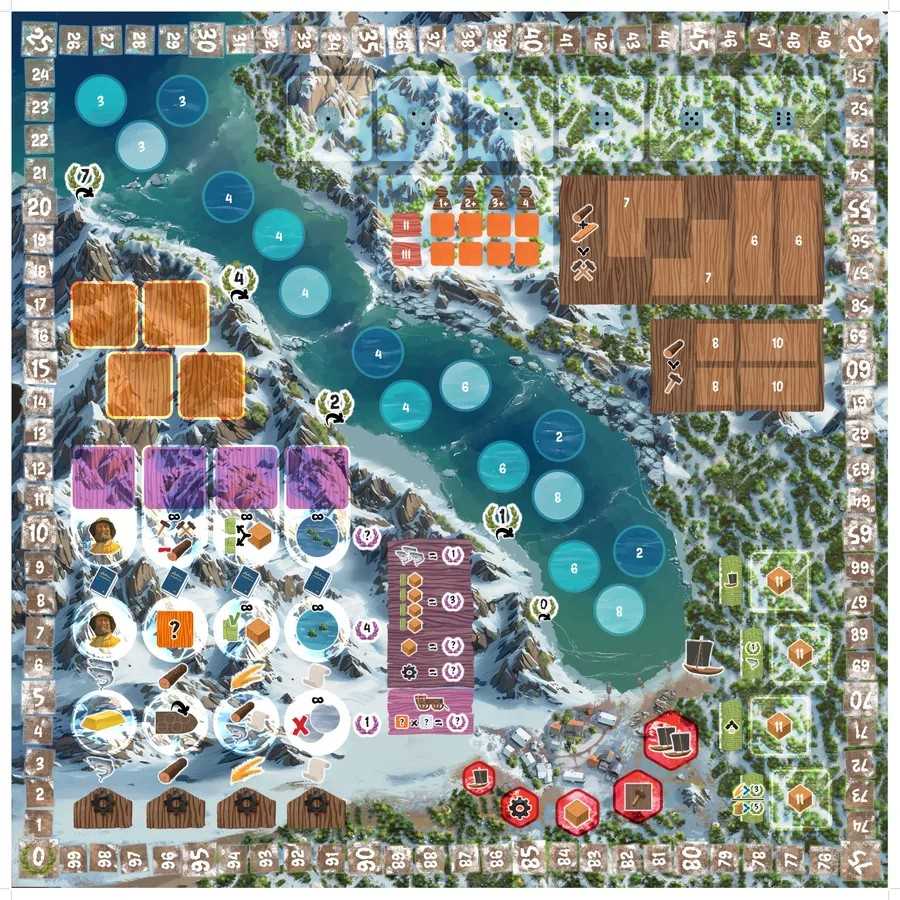
Saltfjord Strategic Board Game by Aporta Games, Dice Drafting, Village Development, and Resource ManagementBuild a fishing village in northern Norway with Saltfjord, a strategic board game set at the end of the 19th century. Players develop their own settlement while making careful decisions about resources, buildings, trade, and technology. Use dice drafting to determine the actions available to you, then send your boat out to gather fish and expand the prosperity of your village. Construct new buildings, improve your capabilities, and discover technologies that can make everyday life more efficient. The game draws inspiration from the dice-drafting mechanisms of Santa Maria, while introducing its own setting, systems, and expanded gameplay. Each decision contributes to the direction of your settlement, giving players several ways to pursue success.43,89 £*Shipping: 1,99 £Secure redirect to the provider


-
Are livestock our slaves?
No, livestock are not our slaves. While humans have domesticated livestock for various purposes such as food, labor, and companionship, it is important to treat them with respect and provide for their well-being. Livestock have their own needs and behaviors, and it is our responsibility to ensure they are cared for in a humane and ethical manner. Viewing livestock as slaves diminishes their value as living beings and disregards their welfare. **
-
What are pay slaves?
Pay slaves are individuals who are trapped in a cycle of working solely to earn money to pay off debts or bills, without being able to break free from this cycle. They are often stuck in low-paying jobs or precarious financial situations, leading to a constant struggle to make ends meet. Pay slaves may feel like they have no choice but to continue working in order to survive, even if they are unhappy or unfulfilled in their work. **
-
Are we modern slaves?
In some ways, modern society can be seen as perpetuating a form of "slavery" through various systems of exploitation and oppression. Many people are trapped in low-paying jobs with little opportunity for advancement, while others are forced into labor through human trafficking or other forms of coercion. Additionally, systemic racism and discrimination can also create conditions that resemble a form of modern slavery for marginalized communities. While the comparison to historical slavery is not exact, there are certainly elements of modern society that perpetuate forms of exploitation and oppression that can be seen as analogous to slavery. **
-
Are there still slaves?
Yes, unfortunately, there are still slaves in the world today. While slavery is illegal in every country, it still exists in various forms such as forced labor, human trafficking, and debt bondage. Millions of people, including men, women, and children, are trapped in these exploitative situations, often with little hope of escape. Efforts to combat modern slavery continue, but it remains a significant global issue. **

Are we indirect slaves?
No, we are not indirect slaves. Slavery involves the ownership and control of one person by another, often with no freedom or rights. While there are systems and structures in place that can create inequalities and exploitation, the majority of people in modern society have the freedom to make choices and pursue their own paths. It is important to work towards addressing and dismantling any systems of oppression and exploitation, but it is not accurate to equate the modern experience with slavery. **
Aren't we all slaves?
While it is true that many people around the world face various forms of oppression and exploitation, it is important to recognize that the term "slave" carries a specific historical and legal significance. Slavery involves the ownership and control of individuals as property, often enforced through violence and coercion. While many people may feel trapped or limited by societal, economic, or political forces, it is crucial to acknowledge the unique and extreme suffering experienced by those who have been subjected to slavery throughout history. It is important to work towards addressing and dismantling systems of oppression and exploitation, while also respecting the distinct experiences of those who have been enslaved. **
Top-Angebote
Products related to Slaves:
-
Perfect Picks Market Geometric Building Blocks Set For Kids Early Education Intelligence Development Toy Geometric Building Blocks Set For Kids Early Education Intelligence Development ToyUnlock your child's potential with this early education equipment designed to stimulate creativity and intelligence! This geometric set is the perfect building block toy for boys, helping to develop problemsolving skills while having fun. The...35,97 $*Shipping: 0,00 $Secure redirect to the provider
-
The Readers Paradise Enhancing Your Leadership Skills: A Practical Handbook for Success by Prof. V.K.Simon - Non Fiction Paperback - Leadership & Professional DevelopmentEnhance your leadership skills with this practical handbook by Prof. V.K.Simon. Written for anyone looking to lead with confidence and clarity, it blends self-awareness, emotional intelligence, and real-world strategy to help you achieve success. Whether you're a first-time manager or a seasoned executive, this compact guide delivers tools to strengthen decision-making, communication, and team impact in a fast-changing global workplace. It's built around the idea that great leadership is learned through practice, not theory alone, and covers the core competencies every effective leader needs, starting with self-awareness and emotional intelligence.2,99 £*Shipping: 2,99 £Secure redirect to the provider
-
Various Publishers How to Talk to Anyone, Next Conversation & Psychology of Management - 3 Book Paperback Set - Communication, Leadership & Management PsychologyThis 3-book collection set brings together three practical, people-focused reads for anyone who wants to communicate better and lead more effectively. Leil Lowndes' classic 'How to Talk to Anyone' pairs with Jefferson Fisher's 'Next Conversation' and a foundational 'Psychology of Management' title to cover everyday conversation, conflict resolution, and workplace psychology in one bundle. Whether you are prepping for interviews, managing a team, or simply want to feel more confident in social situations, this paperback set offers accessible, actionable guidance you can start using immediately. The set includes 'How to Talk to Anyone' by Leil Lowndes, 'Next Conversation' by Jefferson Fisher, and 'Psychology of Management'.20,99 £*Shipping: 2,99 £Secure redirect to the provider
-
Pan Macmillan Radical Candor by Kim Scott The Bestselling Leadership Book - Management, Feedback & Workplace Culture BookRadical Candor by Kim Scott is a groundbreaking leadership and communication guide that teaches how to give feedback effectively, build trust, and create high-performing teams without becoming harsh—or avoiding difficult conversations. Based on Scott’s experience at Google, Apple and Silicon Valley startups, Radical Candor introduces a simple but powerful framework built on two pillars: Care Personally Challenge Directly The book provides practical tools for giving honest feedback, fostering open communication, strengthening working relationships, and becoming a more compassionate and impactful leader. Perfect for managers, team leaders, HR professionals, and anyone wanting to build a healthy, productive workplace culture. Radical Candor is the perfect handbook for those who are looking to find meaning in their job and create an environment where people love both their work and their colleagues, and are motivated to strive to ever greater success.2,99 £*Shipping: 1,99 £Secure redirect to the provider
-
Are pets slaves?
No, pets are not considered slaves. While pets may rely on their owners for care and sustenance, they are not forced to work or serve their owners against their will. Pets are typically kept for companionship and are provided with a loving and safe environment by their owners. The relationship between pets and their owners is based on mutual affection and care, rather than exploitation or servitude. **
-
Are butlers slaves?
No, butlers are not slaves. They are hired employees who work in a domestic setting, typically in a large household or estate, and are responsible for managing the household and attending to the needs of the residents. While they may perform tasks that could be seen as servile, they are not owned by their employers and are compensated for their work. Butlers have a professional role and are expected to carry out their duties with professionalism and discretion. **
-
Are livestock our slaves?
No, livestock are not our slaves. While humans have domesticated livestock for various purposes such as food, labor, and companionship, it is important to treat them with respect and provide for their well-being. Livestock have their own needs and behaviors, and it is our responsibility to ensure they are cared for in a humane and ethical manner. Viewing livestock as slaves diminishes their value as living beings and disregards their welfare. **
-
What are pay slaves?
Pay slaves are individuals who are trapped in a cycle of working solely to earn money to pay off debts or bills, without being able to break free from this cycle. They are often stuck in low-paying jobs or precarious financial situations, leading to a constant struggle to make ends meet. Pay slaves may feel like they have no choice but to continue working in order to survive, even if they are unhappy or unfulfilled in their work. **
Similar search terms for Slaves
-
The Readers Paradise Counseling Skills For Managers by Prof. N.K. Daniel - Paperback - Leadership, Coaching & Workplace Ethics Guide for Managers and HR ProfessionalsCounseling Skills For Managers is a practical guide that helps leaders develop essential counseling skills for the workplace. Written for managers, team leads, HR professionals, and aspiring executives, it covers foundational counseling theory and its strategic application in corporate settings. The book teaches readers how to listen with empathy, structure coaching conversations, resolve role conflicts, and support colleagues through change and difficulty, all while maintaining clear ethical boundaries. This guide is a valuable addition to any professional development or leadership library, offering a unique blend of psychology and management principles in an accessible format.2,99 £*Shipping: 2,99 £Secure redirect to the provider
-
Saltfjord Strategic Board Game by Aporta Games, Dice Drafting, Village Development, and Resource ManagementBuild a fishing village in northern Norway with Saltfjord, a strategic board game set at the end of the 19th century. Players develop their own settlement while making careful decisions about resources, buildings, trade, and technology. Use dice drafting to determine the actions available to you, then send your boat out to gather fish and expand the prosperity of your village. Construct new buildings, improve your capabilities, and discover technologies that can make everyday life more efficient. The game draws inspiration from the dice-drafting mechanisms of Santa Maria, while introducing its own setting, systems, and expanded gameplay. Each decision contributes to the direction of your settlement, giving players several ways to pursue success.43,89 £*Shipping: 1,99 £Secure redirect to the provider
-
How Management Works: Concepts Visually Explained by DK - Hardback Non Fiction Business & Leadership Visual Guide for ManagersA definitive guide to modern management, 'How Management Works: Concepts Visually Explained' by DK offers clear explanations and bold diagrams to help you understand leadership, communication, strategy, team dynamics, and decision-making. This hardback book is ideal for new and experienced managers, business students, and anyone looking for a practical reference on effective team management. Published by DK as part of their 'How Things Work' visual series, it distills complex management theory into accessible guidance that you can apply immediately.13,49 £*Shipping: 2,99 £Secure redirect to the provider
-
Are we modern slaves?
In some ways, modern society can be seen as perpetuating a form of "slavery" through various systems of exploitation and oppression. Many people are trapped in low-paying jobs with little opportunity for advancement, while others are forced into labor through human trafficking or other forms of coercion. Additionally, systemic racism and discrimination can also create conditions that resemble a form of modern slavery for marginalized communities. While the comparison to historical slavery is not exact, there are certainly elements of modern society that perpetuate forms of exploitation and oppression that can be seen as analogous to slavery. **
-
Are there still slaves?
Yes, unfortunately, there are still slaves in the world today. While slavery is illegal in every country, it still exists in various forms such as forced labor, human trafficking, and debt bondage. Millions of people, including men, women, and children, are trapped in these exploitative situations, often with little hope of escape. Efforts to combat modern slavery continue, but it remains a significant global issue. **
-
Are we indirect slaves?
No, we are not indirect slaves. Slavery involves the ownership and control of one person by another, often with no freedom or rights. While there are systems and structures in place that can create inequalities and exploitation, the majority of people in modern society have the freedom to make choices and pursue their own paths. It is important to work towards addressing and dismantling any systems of oppression and exploitation, but it is not accurate to equate the modern experience with slavery. **
-
Aren't we all slaves?
While it is true that many people around the world face various forms of oppression and exploitation, it is important to recognize that the term "slave" carries a specific historical and legal significance. Slavery involves the ownership and control of individuals as property, often enforced through violence and coercion. While many people may feel trapped or limited by societal, economic, or political forces, it is crucial to acknowledge the unique and extreme suffering experienced by those who have been subjected to slavery throughout history. It is important to work towards addressing and dismantling systems of oppression and exploitation, while also respecting the distinct experiences of those who have been enslaved. **
* All prices are inclusive of VAT and, if applicable, plus shipping costs. The offer information is based on the details provided by the respective shop and is updated through automated processes. Real-time updates do not occur, so deviations can occur in individual cases. ** Note: Parts of this content were created by AI.