Buy aefca.eu ?
We are moving the project
aefca.eu .
Are you interested in purchasing the domain
aefca.eu ?
domain@kv-gmbh.de · 0541-91531010
Buy aefca.eu ?
What are river variables and potential variables?
River variables are physical, chemical, and biological characteristics of a river that can be measured and monitored to assess its health and quality. These variables include parameters such as water temperature, pH levels, dissolved oxygen, nutrient concentrations, and the presence of pollutants. Potential variables are factors that can influence or impact the river variables, such as land use practices, urban development, agricultural runoff, and climate change. Understanding both river variables and potential variables is essential for effective river management and conservation efforts. **
What is the difference between primitive variables and reference variables?
Primitive variables store the actual value, such as numbers or characters, directly in memory. Reference variables, on the other hand, store a reference to an object in memory rather than the actual value. This means that when working with reference variables, you are actually working with the object that the reference points to, while with primitive variables, you are working directly with the value stored in memory. Additionally, primitive variables are allocated on the stack, while reference variables are allocated on the heap. **

Similar search terms for Variables
Top-Angebote
Products related to Variables:
-
The Readers Paradise Counseling Skills For Managers by Prof. N.K. Daniel - Paperback - Leadership, Coaching & Workplace Ethics Guide for Managers and HR ProfessionalsCounseling Skills For Managers is a practical guide that helps leaders develop essential counseling skills for the workplace. Written for managers, team leads, HR professionals, and aspiring executives, it covers foundational counseling theory and its strategic application in corporate settings. The book teaches readers how to listen with empathy, structure coaching conversations, resolve role conflicts, and support colleagues through change and difficulty, all while maintaining clear ethical boundaries. This guide is a valuable addition to any professional development or leadership library, offering a unique blend of psychology and management principles in an accessible format.2,99 £*Shipping: 2,99 £Secure redirect to the provider
-
Various Publishers How to Talk to Anyone, Next Conversation & Psychology of Management - 3 Book Paperback Set - Communication, Leadership & Management PsychologyThis 3-book collection set brings together three practical, people-focused reads for anyone who wants to communicate better and lead more effectively. Leil Lowndes' classic 'How to Talk to Anyone' pairs with Jefferson Fisher's 'Next Conversation' and a foundational 'Psychology of Management' title to cover everyday conversation, conflict resolution, and workplace psychology in one bundle. Whether you are prepping for interviews, managing a team, or simply want to feel more confident in social situations, this paperback set offers accessible, actionable guidance you can start using immediately. The set includes 'How to Talk to Anyone' by Leil Lowndes, 'Next Conversation' by Jefferson Fisher, and 'Psychology of Management'.20,99 £*Shipping: 2,99 £Secure redirect to the provider
-
Rethink Press Be the Leader You Want to See by Susie Ramroop - Paperback Leadership & Career Development Book for Ambitious ProfessionalsBe the Leader You Want to See is a leadership guide by career coach Susie Ramroop, written for ambitious professionals. This brand-new paperback helps you unlock the talent you already possess and present it to the world with confidence. The book is structured around three transformative stages: Awareness, Bravery, and Contribution. In Awareness, you break free from the search for fulfillment and quieten the inner impostor that has kept you playing small. In Bravery, you learn to step up and take on new challenges. The book is a concise and purpose-driven guide that turns good intentions into tangible career progress for managers, aspiring leaders, and mentors alike. Susie Ramroop guides readers through the three stages, helping them to become the leaders they want to see.4,99 £*Shipping: 2,99 £Secure redirect to the provider




-
What is the difference between ordinal scaled variables and ordinal variables?
Ordinal scaled variables are variables that have a specific order or ranking, but the intervals between the values are not necessarily equal. On the other hand, ordinal variables are variables that have categories with a natural order, but the numerical values assigned to them do not have any meaningful interpretation. In summary, ordinal scaled variables have meaningful numerical values with a specific order, while ordinal variables have categories with a natural order but lack meaningful numerical values. **
-
What are random variables?
Random variables are variables that can take on different values based on the outcome of a random event. They represent the possible outcomes of a random process and are used in probability theory and statistics to quantify uncertainty. Random variables can be discrete, taking on a finite number of values, or continuous, taking on any value within a range. They are essential for modeling and analyzing uncertain situations in various fields such as finance, engineering, and biology. **
-
What are reduced variables?
Reduced variables are a set of transformed variables that are used to simplify the analysis of a system or process. These variables are often obtained by scaling or normalizing the original variables to make them more manageable and easier to interpret. By using reduced variables, complex systems can be analyzed and understood more effectively, leading to better insights and decision-making. **
-
How do I solve an equation with form variables and solution variables?
To solve an equation with form variables and solution variables, you first need to isolate the solution variable on one side of the equation. This involves performing the necessary operations (addition, subtraction, multiplication, division) to move all other variables to the other side of the equation. Once you have isolated the solution variable, you can then solve for it by performing any additional operations needed to simplify the equation. Finally, you can substitute the solution back into the original equation to verify that it satisfies the equation. **


What is a local variable and what is the difference to instance variables, class variables, and normal variables in Java?
A local variable in Java is a variable that is declared within a method, constructor, or block of code and is only accessible within that specific scope. It is temporary and exists only for the duration of the method execution. The main difference between local variables, instance variables, class variables, and normal variables in Java is their scope and lifetime. Instance variables are declared within a class but outside of any method and are accessible to all methods within the class. Class variables are declared with the static keyword and are shared among all instances of a class. Normal variables refer to any variable that is not a local, instance, or class variable. **
How can variables be simplified?
Variables can be simplified by combining like terms. This involves adding or subtracting variables with the same exponent. Additionally, variables can be simplified by using the distributive property to factor out common factors. Another way to simplify variables is by using the rules of exponents to simplify expressions with variables raised to powers. **
Top-Angebote
Products related to Variables:
-
Perfect Picks Market Geometric Building Blocks Set For Kids Early Education Intelligence Development Toy Geometric Building Blocks Set For Kids Early Education Intelligence Development ToyUnlock your child's potential with this early education equipment designed to stimulate creativity and intelligence! This geometric set is the perfect building block toy for boys, helping to develop problemsolving skills while having fun. The...35,97 $*Shipping: 0,00 $Secure redirect to the provider
-
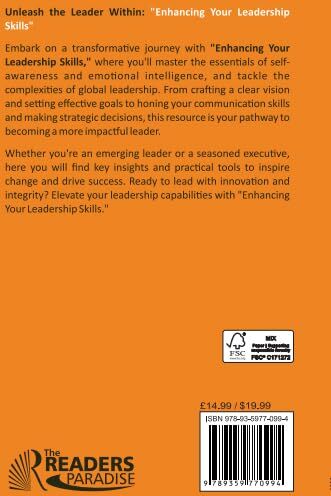
The Readers Paradise Enhancing Your Leadership Skills: A Practical Handbook for Success by Prof. V.K.Simon - Non Fiction Paperback - Leadership & Professional DevelopmentEnhance your leadership skills with this practical handbook by Prof. V.K.Simon. Written for anyone looking to lead with confidence and clarity, it blends self-awareness, emotional intelligence, and real-world strategy to help you achieve success. Whether you're a first-time manager or a seasoned executive, this compact guide delivers tools to strengthen decision-making, communication, and team impact in a fast-changing global workplace. It's built around the idea that great leadership is learned through practice, not theory alone, and covers the core competencies every effective leader needs, starting with self-awareness and emotional intelligence.2,99 £*Shipping: 2,99 £Secure redirect to the provider
-
The Readers Paradise Counseling Skills For Managers by Prof. N.K. Daniel - Paperback - Leadership, Coaching & Workplace Ethics Guide for Managers and HR ProfessionalsCounseling Skills For Managers is a practical guide that helps leaders develop essential counseling skills for the workplace. Written for managers, team leads, HR professionals, and aspiring executives, it covers foundational counseling theory and its strategic application in corporate settings. The book teaches readers how to listen with empathy, structure coaching conversations, resolve role conflicts, and support colleagues through change and difficulty, all while maintaining clear ethical boundaries. This guide is a valuable addition to any professional development or leadership library, offering a unique blend of psychology and management principles in an accessible format.2,99 £*Shipping: 2,99 £Secure redirect to the provider
-
What are river variables and potential variables?
River variables are physical, chemical, and biological characteristics of a river that can be measured and monitored to assess its health and quality. These variables include parameters such as water temperature, pH levels, dissolved oxygen, nutrient concentrations, and the presence of pollutants. Potential variables are factors that can influence or impact the river variables, such as land use practices, urban development, agricultural runoff, and climate change. Understanding both river variables and potential variables is essential for effective river management and conservation efforts. **
-
What is the difference between primitive variables and reference variables?
Primitive variables store the actual value, such as numbers or characters, directly in memory. Reference variables, on the other hand, store a reference to an object in memory rather than the actual value. This means that when working with reference variables, you are actually working with the object that the reference points to, while with primitive variables, you are working directly with the value stored in memory. Additionally, primitive variables are allocated on the stack, while reference variables are allocated on the heap. **
-
What is the difference between ordinal scaled variables and ordinal variables?
Ordinal scaled variables are variables that have a specific order or ranking, but the intervals between the values are not necessarily equal. On the other hand, ordinal variables are variables that have categories with a natural order, but the numerical values assigned to them do not have any meaningful interpretation. In summary, ordinal scaled variables have meaningful numerical values with a specific order, while ordinal variables have categories with a natural order but lack meaningful numerical values. **
-
What are random variables?
Random variables are variables that can take on different values based on the outcome of a random event. They represent the possible outcomes of a random process and are used in probability theory and statistics to quantify uncertainty. Random variables can be discrete, taking on a finite number of values, or continuous, taking on any value within a range. They are essential for modeling and analyzing uncertain situations in various fields such as finance, engineering, and biology. **
Similar search terms for Variables
-
Various Publishers How to Talk to Anyone, Next Conversation & Psychology of Management - 3 Book Paperback Set - Communication, Leadership & Management PsychologyThis 3-book collection set brings together three practical, people-focused reads for anyone who wants to communicate better and lead more effectively. Leil Lowndes' classic 'How to Talk to Anyone' pairs with Jefferson Fisher's 'Next Conversation' and a foundational 'Psychology of Management' title to cover everyday conversation, conflict resolution, and workplace psychology in one bundle. Whether you are prepping for interviews, managing a team, or simply want to feel more confident in social situations, this paperback set offers accessible, actionable guidance you can start using immediately. The set includes 'How to Talk to Anyone' by Leil Lowndes, 'Next Conversation' by Jefferson Fisher, and 'Psychology of Management'.20,99 £*Shipping: 2,99 £Secure redirect to the provider
-
Rethink Press Be the Leader You Want to See by Susie Ramroop - Paperback Leadership & Career Development Book for Ambitious ProfessionalsBe the Leader You Want to See is a leadership guide by career coach Susie Ramroop, written for ambitious professionals. This brand-new paperback helps you unlock the talent you already possess and present it to the world with confidence. The book is structured around three transformative stages: Awareness, Bravery, and Contribution. In Awareness, you break free from the search for fulfillment and quieten the inner impostor that has kept you playing small. In Bravery, you learn to step up and take on new challenges. The book is a concise and purpose-driven guide that turns good intentions into tangible career progress for managers, aspiring leaders, and mentors alike. Susie Ramroop guides readers through the three stages, helping them to become the leaders they want to see.4,99 £*Shipping: 2,99 £Secure redirect to the provider
-
Pan Macmillan Radical Candor by Kim Scott The Bestselling Leadership Book - Management, Feedback & Workplace Culture BookRadical Candor by Kim Scott is a groundbreaking leadership and communication guide that teaches how to give feedback effectively, build trust, and create high-performing teams without becoming harsh—or avoiding difficult conversations. Based on Scott’s experience at Google, Apple and Silicon Valley startups, Radical Candor introduces a simple but powerful framework built on two pillars: Care Personally Challenge Directly The book provides practical tools for giving honest feedback, fostering open communication, strengthening working relationships, and becoming a more compassionate and impactful leader. Perfect for managers, team leaders, HR professionals, and anyone wanting to build a healthy, productive workplace culture. Radical Candor is the perfect handbook for those who are looking to find meaning in their job and create an environment where people love both their work and their colleagues, and are motivated to strive to ever greater success.2,99 £*Shipping: 1,99 £Secure redirect to the provider
-
What are reduced variables?
Reduced variables are a set of transformed variables that are used to simplify the analysis of a system or process. These variables are often obtained by scaling or normalizing the original variables to make them more manageable and easier to interpret. By using reduced variables, complex systems can be analyzed and understood more effectively, leading to better insights and decision-making. **
-
How do I solve an equation with form variables and solution variables?
To solve an equation with form variables and solution variables, you first need to isolate the solution variable on one side of the equation. This involves performing the necessary operations (addition, subtraction, multiplication, division) to move all other variables to the other side of the equation. Once you have isolated the solution variable, you can then solve for it by performing any additional operations needed to simplify the equation. Finally, you can substitute the solution back into the original equation to verify that it satisfies the equation. **
-
What is a local variable and what is the difference to instance variables, class variables, and normal variables in Java?
A local variable in Java is a variable that is declared within a method, constructor, or block of code and is only accessible within that specific scope. It is temporary and exists only for the duration of the method execution. The main difference between local variables, instance variables, class variables, and normal variables in Java is their scope and lifetime. Instance variables are declared within a class but outside of any method and are accessible to all methods within the class. Class variables are declared with the static keyword and are shared among all instances of a class. Normal variables refer to any variable that is not a local, instance, or class variable. **
-
How can variables be simplified?
Variables can be simplified by combining like terms. This involves adding or subtracting variables with the same exponent. Additionally, variables can be simplified by using the distributive property to factor out common factors. Another way to simplify variables is by using the rules of exponents to simplify expressions with variables raised to powers. **
* All prices are inclusive of VAT and, if applicable, plus shipping costs. The offer information is based on the details provided by the respective shop and is updated through automated processes. Real-time updates do not occur, so deviations can occur in individual cases. ** Note: Parts of this content were created by AI.