Buy aefca.eu ?
We are moving the project
aefca.eu .
Are you interested in purchasing the domain
aefca.eu ?
domain@kv-gmbh.de · 0541-91531010
Buy aefca.eu ?
What is the explanation for the higher development of vertebrates?
The higher development of vertebrates can be attributed to several key evolutionary adaptations. Vertebrates possess a complex nervous system, including a brain and spinal cord, which allows for more sophisticated behaviors and responses to the environment. Additionally, the presence of a bony skeleton provides structural support and protection for internal organs, allowing for larger body sizes and increased mobility. Vertebrates also have specialized sensory organs, such as eyes and ears, that enable them to gather more detailed information about their surroundings, enhancing their ability to survive and thrive in diverse habitats. **
How have vertebrates evolved?
Vertebrates have evolved over millions of years through a process of natural selection and genetic mutations. They have adapted to various environments by developing specialized traits such as limbs for land movement, wings for flight, and fins for swimming. Vertebrates have also diversified into different species with unique characteristics to better survive and thrive in their respective habitats. Overall, the evolution of vertebrates has been a complex and dynamic process that has led to the incredible diversity of species we see today. **

Similar search terms for Vertebrates
Top-Angebote
Products related to Vertebrates:
-
The Readers Paradise Counseling Skills For Managers by Prof. N.K. Daniel - Paperback - Leadership, Coaching & Workplace Ethics Guide for Managers and HR ProfessionalsCounseling Skills For Managers is a practical guide that helps leaders develop essential counseling skills for the workplace. Written for managers, team leads, HR professionals, and aspiring executives, it covers foundational counseling theory and its strategic application in corporate settings. The book teaches readers how to listen with empathy, structure coaching conversations, resolve role conflicts, and support colleagues through change and difficulty, all while maintaining clear ethical boundaries. This guide is a valuable addition to any professional development or leadership library, offering a unique blend of psychology and management principles in an accessible format.2,99 £*Shipping: 2,99 £Secure redirect to the provider
-
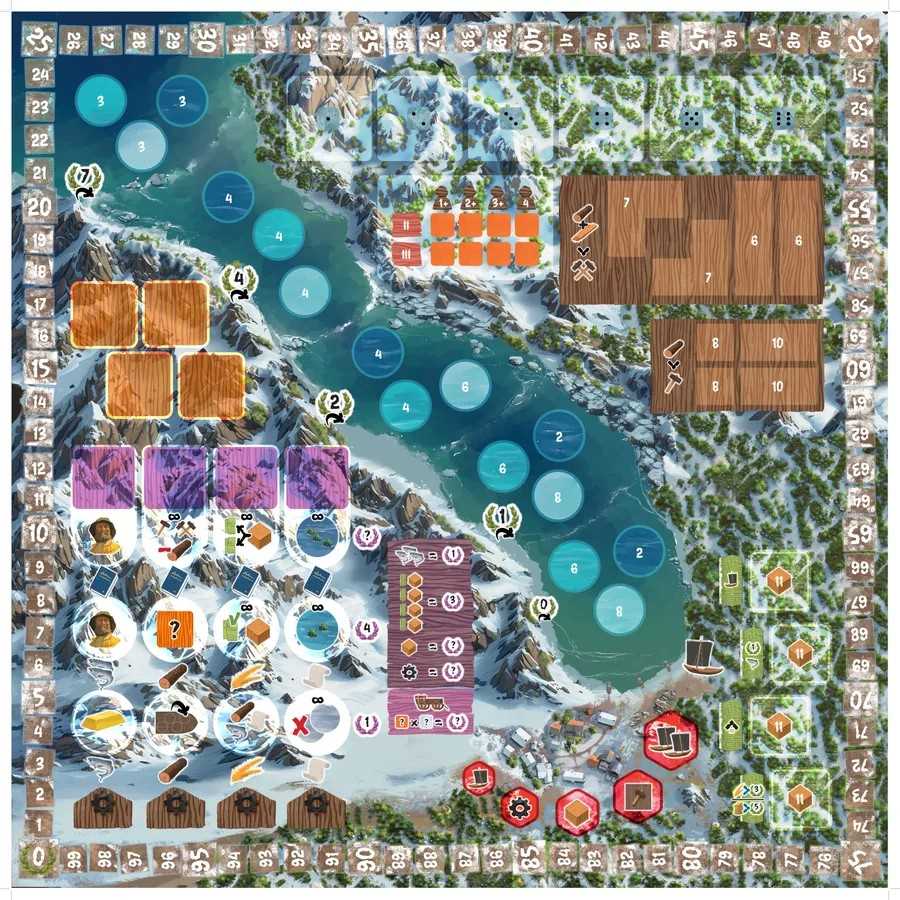
Aporta Games Saltfjord Board Game - Dice Drafting - Village Development - Resource ManagementBuild a fishing village in northern Norway with Saltfjord, a strategic board game set at the end of the 19th century. Players develop their own settlement while making careful decisions about resources, buildings, trade, and technology. Use dice drafting to determine the actions available to you, then send your boat out to gather fish and expand the prosperity of your village. Construct new buildings, improve your capabilities, and discover technologies that can make everyday life more efficient. The game draws inspiration from the dice-drafting mechanisms of Santa Maria, while introducing its own setting, systems, and expanded gameplay. Each decision contributes to the direction of your settlement, giving players several ways to pursue success.42,49 £*Shipping: 3,95 £Secure redirect to the provider
-
Various Publishers How to Talk to Anyone, Next Conversation & Psychology of Management - 3 Book Paperback Set - Communication, Leadership & Management PsychologyThis 3-book collection set brings together three practical, people-focused reads for anyone who wants to communicate better and lead more effectively. Leil Lowndes' classic 'How to Talk to Anyone' pairs with Jefferson Fisher's 'Next Conversation' and a foundational 'Psychology of Management' title to cover everyday conversation, conflict resolution, and workplace psychology in one bundle. Whether you are prepping for interviews, managing a team, or simply want to feel more confident in social situations, this paperback set offers accessible, actionable guidance you can start using immediately. The set includes 'How to Talk to Anyone' by Leil Lowndes, 'Next Conversation' by Jefferson Fisher, and 'Psychology of Management'.20,99 £*Shipping: 2,99 £Secure redirect to the provider



-
How can the criteria of evolutionary development in vertebrates be demonstrated?
The criteria of evolutionary development in vertebrates can be demonstrated through the study of comparative anatomy, embryology, and genetics. By comparing the anatomical structures of different vertebrate species, scientists can identify similarities and differences that provide evidence of evolutionary relationships. Additionally, studying the embryonic development of vertebrates can reveal shared developmental pathways and structures that point to common ancestry. Finally, genetic analysis can provide insights into the evolutionary history of vertebrates by identifying shared genetic sequences and molecular mechanisms. Together, these approaches help to demonstrate the criteria of evolutionary development in vertebrates. **
-
What are classes of vertebrates?
Vertebrates are animals with a backbone or spinal column. There are five main classes of vertebrates: mammals, birds, reptiles, amphibians, and fish. Each class has unique characteristics and adaptations that help them thrive in their respective environments. These classes are further divided into different orders, families, and species based on specific traits and evolutionary history. **
-
What are the two oldest groups of vertebrates that evolved from the early vertebrates?
The two oldest groups of vertebrates that evolved from early vertebrates are the jawless fish, such as lampreys and hagfish, and the cartilaginous fish, including sharks, rays, and skates. These groups are considered some of the most ancient vertebrates and have been around for hundreds of millions of years. Jawless fish are characterized by their lack of true jaws, while cartilaginous fish have skeletons made of cartilage instead of bone. **
-
What is a question about vertebrates?
One question about vertebrates could be: How do the skeletal structures of vertebrates, such as humans, fish, and birds, differ in terms of adaptations for movement and support? **


What is the evolution of vertebrates?
The evolution of vertebrates is a complex process that spans hundreds of millions of years. It is believed that vertebrates evolved from a group of ancient invertebrate chordates, with the first vertebrates appearing around 500 million years ago. Over time, vertebrates diversified and evolved into a wide range of species, including fish, amphibians, reptiles, birds, and mammals. This evolution was marked by key innovations such as the development of jaws, limbs, and the ability to live on land. Today, vertebrates are the most diverse group of animals on Earth, with over 65,000 species. **
Which are the oldest groups of vertebrates?
The oldest groups of vertebrates are jawless fish, which include hagfish and lampreys. These ancient fish have been around for hundreds of millions of years and are considered some of the most primitive vertebrates. They lack true jaws and have a cartilaginous skeleton, distinguishing them from more advanced vertebrates like bony fish, amphibians, reptiles, birds, and mammals. Despite their simple anatomy, jawless fish have managed to survive and adapt to various environments over time. **
Top-Angebote
Products related to Vertebrates:
-
Perfect Picks Market Geometric Building Blocks Set For Kids Early Education Intelligence Development Toy Geometric Building Blocks Set For Kids Early Education Intelligence Development ToyUnlock your child's potential with this early education equipment designed to stimulate creativity and intelligence! This geometric set is the perfect building block toy for boys, helping to develop problemsolving skills while having fun. The...35,97 $*Shipping: 0,00 $Secure redirect to the provider
-
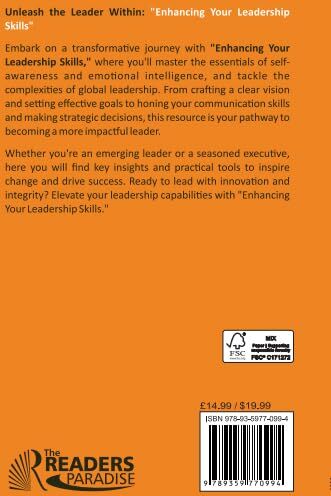
The Readers Paradise Enhancing Your Leadership Skills: A Practical Handbook for Success by Prof. V.K.Simon - Non Fiction Paperback - Leadership & Professional DevelopmentEnhance your leadership skills with this practical handbook by Prof. V.K.Simon. Written for anyone looking to lead with confidence and clarity, it blends self-awareness, emotional intelligence, and real-world strategy to help you achieve success. Whether you're a first-time manager or a seasoned executive, this compact guide delivers tools to strengthen decision-making, communication, and team impact in a fast-changing global workplace. It's built around the idea that great leadership is learned through practice, not theory alone, and covers the core competencies every effective leader needs, starting with self-awareness and emotional intelligence.2,99 £*Shipping: 2,99 £Secure redirect to the provider
-
The Readers Paradise Counseling Skills For Managers by Prof. N.K. Daniel - Paperback - Leadership, Coaching & Workplace Ethics Guide for Managers and HR ProfessionalsCounseling Skills For Managers is a practical guide that helps leaders develop essential counseling skills for the workplace. Written for managers, team leads, HR professionals, and aspiring executives, it covers foundational counseling theory and its strategic application in corporate settings. The book teaches readers how to listen with empathy, structure coaching conversations, resolve role conflicts, and support colleagues through change and difficulty, all while maintaining clear ethical boundaries. This guide is a valuable addition to any professional development or leadership library, offering a unique blend of psychology and management principles in an accessible format.2,99 £*Shipping: 2,99 £Secure redirect to the provider
-
Aporta Games Saltfjord Board Game - Dice Drafting - Village Development - Resource ManagementBuild a fishing village in northern Norway with Saltfjord, a strategic board game set at the end of the 19th century. Players develop their own settlement while making careful decisions about resources, buildings, trade, and technology. Use dice drafting to determine the actions available to you, then send your boat out to gather fish and expand the prosperity of your village. Construct new buildings, improve your capabilities, and discover technologies that can make everyday life more efficient. The game draws inspiration from the dice-drafting mechanisms of Santa Maria, while introducing its own setting, systems, and expanded gameplay. Each decision contributes to the direction of your settlement, giving players several ways to pursue success.42,49 £*Shipping: 3,95 £Secure redirect to the provider
-
What is the explanation for the higher development of vertebrates?
The higher development of vertebrates can be attributed to several key evolutionary adaptations. Vertebrates possess a complex nervous system, including a brain and spinal cord, which allows for more sophisticated behaviors and responses to the environment. Additionally, the presence of a bony skeleton provides structural support and protection for internal organs, allowing for larger body sizes and increased mobility. Vertebrates also have specialized sensory organs, such as eyes and ears, that enable them to gather more detailed information about their surroundings, enhancing their ability to survive and thrive in diverse habitats. **
-
How have vertebrates evolved?
Vertebrates have evolved over millions of years through a process of natural selection and genetic mutations. They have adapted to various environments by developing specialized traits such as limbs for land movement, wings for flight, and fins for swimming. Vertebrates have also diversified into different species with unique characteristics to better survive and thrive in their respective habitats. Overall, the evolution of vertebrates has been a complex and dynamic process that has led to the incredible diversity of species we see today. **
-
How can the criteria of evolutionary development in vertebrates be demonstrated?
The criteria of evolutionary development in vertebrates can be demonstrated through the study of comparative anatomy, embryology, and genetics. By comparing the anatomical structures of different vertebrate species, scientists can identify similarities and differences that provide evidence of evolutionary relationships. Additionally, studying the embryonic development of vertebrates can reveal shared developmental pathways and structures that point to common ancestry. Finally, genetic analysis can provide insights into the evolutionary history of vertebrates by identifying shared genetic sequences and molecular mechanisms. Together, these approaches help to demonstrate the criteria of evolutionary development in vertebrates. **
-
What are classes of vertebrates?
Vertebrates are animals with a backbone or spinal column. There are five main classes of vertebrates: mammals, birds, reptiles, amphibians, and fish. Each class has unique characteristics and adaptations that help them thrive in their respective environments. These classes are further divided into different orders, families, and species based on specific traits and evolutionary history. **
Similar search terms for Vertebrates
-
Various Publishers How to Talk to Anyone, Next Conversation & Psychology of Management - 3 Book Paperback Set - Communication, Leadership & Management PsychologyThis 3-book collection set brings together three practical, people-focused reads for anyone who wants to communicate better and lead more effectively. Leil Lowndes' classic 'How to Talk to Anyone' pairs with Jefferson Fisher's 'Next Conversation' and a foundational 'Psychology of Management' title to cover everyday conversation, conflict resolution, and workplace psychology in one bundle. Whether you are prepping for interviews, managing a team, or simply want to feel more confident in social situations, this paperback set offers accessible, actionable guidance you can start using immediately. The set includes 'How to Talk to Anyone' by Leil Lowndes, 'Next Conversation' by Jefferson Fisher, and 'Psychology of Management'.20,99 £*Shipping: 2,99 £Secure redirect to the provider
-
Pan Macmillan Radical Candor by Kim Scott The Bestselling Leadership Book - Management, Feedback & Workplace Culture BookRadical Candor by Kim Scott is a groundbreaking leadership and communication guide that teaches how to give feedback effectively, build trust, and create high-performing teams without becoming harsh—or avoiding difficult conversations. Based on Scott’s experience at Google, Apple and Silicon Valley startups, Radical Candor introduces a simple but powerful framework built on two pillars: Care Personally Challenge Directly The book provides practical tools for giving honest feedback, fostering open communication, strengthening working relationships, and becoming a more compassionate and impactful leader. Perfect for managers, team leaders, HR professionals, and anyone wanting to build a healthy, productive workplace culture. Radical Candor is the perfect handbook for those who are looking to find meaning in their job and create an environment where people love both their work and their colleagues, and are motivated to strive to ever greater success.2,99 £*Shipping: 1,99 £Secure redirect to the provider
-
What are the two oldest groups of vertebrates that evolved from the early vertebrates?
The two oldest groups of vertebrates that evolved from early vertebrates are the jawless fish, such as lampreys and hagfish, and the cartilaginous fish, including sharks, rays, and skates. These groups are considered some of the most ancient vertebrates and have been around for hundreds of millions of years. Jawless fish are characterized by their lack of true jaws, while cartilaginous fish have skeletons made of cartilage instead of bone. **
-
What is a question about vertebrates?
One question about vertebrates could be: How do the skeletal structures of vertebrates, such as humans, fish, and birds, differ in terms of adaptations for movement and support? **
-
What is the evolution of vertebrates?
The evolution of vertebrates is a complex process that spans hundreds of millions of years. It is believed that vertebrates evolved from a group of ancient invertebrate chordates, with the first vertebrates appearing around 500 million years ago. Over time, vertebrates diversified and evolved into a wide range of species, including fish, amphibians, reptiles, birds, and mammals. This evolution was marked by key innovations such as the development of jaws, limbs, and the ability to live on land. Today, vertebrates are the most diverse group of animals on Earth, with over 65,000 species. **
-
Which are the oldest groups of vertebrates?
The oldest groups of vertebrates are jawless fish, which include hagfish and lampreys. These ancient fish have been around for hundreds of millions of years and are considered some of the most primitive vertebrates. They lack true jaws and have a cartilaginous skeleton, distinguishing them from more advanced vertebrates like bony fish, amphibians, reptiles, birds, and mammals. Despite their simple anatomy, jawless fish have managed to survive and adapt to various environments over time. **
* All prices are inclusive of VAT and, if applicable, plus shipping costs. The offer information is based on the details provided by the respective shop and is updated through automated processes. Real-time updates do not occur, so deviations can occur in individual cases. ** Note: Parts of this content were created by AI.