Buy aefca.eu ?
We are moving the project
aefca.eu .
Are you interested in purchasing the domain
aefca.eu ?
domain@kv-gmbh.de · 0541-91531010
Buy aefca.eu ?
How many vertices does a prism with 20 lateral faces and 1000 vertices have?
A prism with 20 lateral faces has 2 additional vertices at each end, so it has a total of 40 vertices. Therefore, a prism with 20 lateral faces and 1000 vertices would have 1000 - 40 = 960 vertices on its lateral faces. **
How many vertices does a circle have?
A circle does not have vertices. Vertices are the points where the edges of a shape meet, and since a circle has no edges, it does not have any vertices. Instead, a circle is defined by its center point and its radius. **

Similar search terms for Vertices
Top-Angebote
Products related to Vertices:
-
Ludonova Coming of Age - Story-driven Development Dice Management Game - Board GameIn Coming of Age, players guide a character from childhood through adolescence, making choices that shape their interests, skills, personality, and future ambitions. Each player begins with a limited range of interests and abilities, then develops through experiences encountered during the game. Use a dice-management mechanism to decide where to go and which opportunities to pursue. Visits around the city introduce new experiences, while interactions and personal decisions influence the traits recorded on your individual player board. Along the way, you will form memories, make friends, fall in love, and learn to handle setbacks. The aim is to fulfill personal life goals by balancing development, independence, and the experiences that define your character. Parental support is important early in the journey, but your choices gradually open up new possibilities as you grow.45,99 £*Shipping: 3,95 £Secure redirect to the provider
-
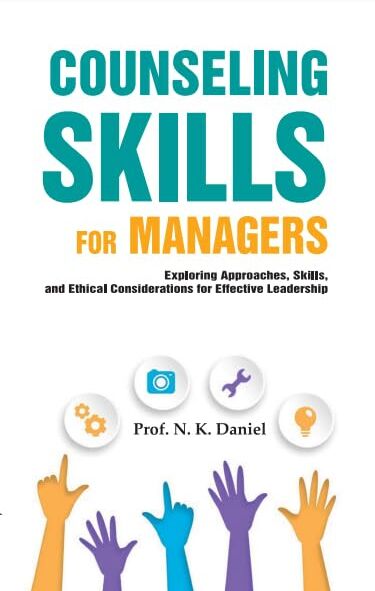
The Readers Paradise Counseling Skills For Managers by Prof. N.K. Daniel - Paperback - Leadership, Coaching & Workplace Ethics Guide for Managers and HR ProfessionalsCounseling Skills For Managers is a practical guide that helps leaders develop essential counseling skills for the workplace. Written for managers, team leads, HR professionals, and aspiring executives, it covers foundational counseling theory and its strategic application in corporate settings. The book teaches readers how to listen with empathy, structure coaching conversations, resolve role conflicts, and support colleagues through change and difficulty, all while maintaining clear ethical boundaries. This guide is a valuable addition to any professional development or leadership library, offering a unique blend of psychology and management principles in an accessible format.2,99 £*Shipping: 2,99 £Secure redirect to the provider
-
Various Publishers How to Talk to Anyone, Next Conversation & Psychology of Management - 3 Book Paperback Set - Communication, Leadership & Management PsychologyThis 3-book collection set brings together three practical, people-focused reads for anyone who wants to communicate better and lead more effectively. Leil Lowndes' classic 'How to Talk to Anyone' pairs with Jefferson Fisher's 'Next Conversation' and a foundational 'Psychology of Management' title to cover everyday conversation, conflict resolution, and workplace psychology in one bundle. Whether you are prepping for interviews, managing a team, or simply want to feel more confident in social situations, this paperback set offers accessible, actionable guidance you can start using immediately. The set includes 'How to Talk to Anyone' by Leil Lowndes, 'Next Conversation' by Jefferson Fisher, and 'Psychology of Management'.20,99 £*Shipping: 2,99 £Secure redirect to the provider



-
What are the vertices in mathematical equations?
In mathematical equations, the vertices are the points where the graph of the equation changes direction. For example, in a parabola, the vertex is the lowest or highest point on the graph, depending on whether the parabola opens upwards or downwards. In a linear equation, the vertex is the point where the line changes direction. The vertex is an important point in understanding the behavior and properties of the graph of an equation. **
-
How many vertices does a trapezoidal prism have?
A trapezoidal prism has 10 vertices. It has 2 vertices on each of the trapezoidal bases and 4 vertices on the rectangular sides. **
-
What is an isometry with non-orthogonal vertices?
An isometry with non-orthogonal vertices is a transformation that preserves distances and angles between points, but the vertices are not at right angles to each other. This means that the shape is still congruent to its original form, but the angles between the edges are not necessarily 90 degrees. Isometries with non-orthogonal vertices can include translations, rotations, reflections, and glide reflections. These transformations are important in geometry and can help us understand the properties of shapes in different orientations. **
-
What is the precise relationship between the vertices?
The relationship between the vertices in a geometric shape depends on the specific shape being considered. In a triangle, the vertices are connected by line segments to form the sides of the triangle. In a square or rectangle, the vertices are connected by line segments to form the four sides of the shape. The vertices of a polygon are the points where the sides of the shape intersect. The precise relationship between the vertices is that they define the corners or points of intersection of the sides of the shape. **

How do I connect two vertices in Blender?
To connect two vertices in Blender, you can use the "F" key to create an edge between them. First, select the two vertices you want to connect by right-clicking on them. Then, press "F" to create an edge between the selected vertices. This will connect the two vertices and create a new edge between them. **
How can one determine the vertices A and C?
To determine the vertices A and C of a triangle, one can look for the points where the sides of the triangle intersect with the x and y axes. The vertex A is the point where the triangle intersects the x-axis, while the vertex C is the point where the triangle intersects the y-axis. By identifying these intersection points, one can determine the vertices A and C of the triangle. **
Top-Angebote
Products related to Vertices:
-
John Murray Business Coaching For Performance 6th Edition: The Principles And Practice Of Coaching And Leadership - Non FictionTitle:. Coaching For Performance 6th Edition: The Principles And Practice Of Coaching And Leadership Overview:. Unlock the full potential of your team with this essential guide to professional coaching. John Whitmore’s text delivers a clear roadmap for improving results. You will learn to ask powerful questions that spark independent thinking. The pages walk you through real-world scenarios to build trust. Every chapter offers actionable steps to foster accountability. You discover how to balance high expectations with genuine support. This updated guide keeps core principles sharp for modern workplaces. It bridges the gap between theory and daily practice. You gain the tools to navigate complex conversations confidently. Your leadership journey starts with a structured path forward. This authoritative text transforms how you approach daily challenges. You stop guessing and start implementing proven methodologies. Your conversations become less stressful and far more productive. What Makes This Book Stand Out:. What sets this title apart is its laser focus on human potential. Instead of offering generic advice, it teaches you how to ignite internal motivation. The widely recognised GROW framework serves as a reliable backbone for every session. You receive concrete techniques for managing resistance at work. The writing remains direct and accessible. You get deep insight into psychological barriers that limit growth. Each lesson connects back to measurable outcomes. This approach cultivates a culture where feedback feels genuinely supportive. You keep returning to its pages for consistent leadership habits. The practical exercises help you track progress without getting bogged down. You watch reluctant employees transform into proactive problem solvers. Managing becomes easier when you shift from telling to asking. Who This Book Is Perfect For:. Managers looking to avoid micromanagement will find immediate value in these pages. Business owners apply these strategies to accelerate team productivity quickly. Human resources professionals appreciate the clear guidelines for one-to-one meetings. Aspiring life coaches benefit from the foundational psychological groundwork. Students studying organisational psychology recognize this as a crucial reference point. Anyone who guides others forward can sharpen their interpersonal skills daily. The guidance works equally well for managing remote or hybrid teams.. You do not need prior training to implement these tactics successfully. The logical structure allows you to dip in for current solutions. Corporate training coordinators frequently adopt this manual as their primary classroom resource. Senior executives use it to recalibrate boardroom dynamics and drive alignment. Key Highlights:. Empowerment Strategy: Learn to replace directives with questions that unlock employee decision-making.. GROW Framework: Master a four-step system for structuring productive development conversations.. Psychological...24,99 £*Shipping: 2,99 £Secure redirect to the provider
-
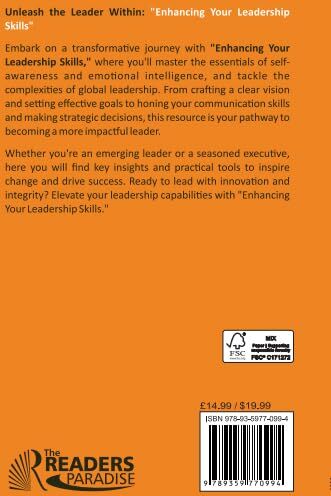
The Readers Paradise Enhancing Your Leadership Skills: A Practical Handbook for Success by Prof. V.K.Simon - Non Fiction Paperback - Leadership & Professional DevelopmentEnhance your leadership skills with this practical handbook by Prof. V.K.Simon. Written for anyone looking to lead with confidence and clarity, it blends self-awareness, emotional intelligence, and real-world strategy to help you achieve success. Whether you're a first-time manager or a seasoned executive, this compact guide delivers tools to strengthen decision-making, communication, and team impact in a fast-changing global workplace. It's built around the idea that great leadership is learned through practice, not theory alone, and covers the core competencies every effective leader needs, starting with self-awareness and emotional intelligence.2,99 £*Shipping: 2,99 £Secure redirect to the provider
-
Ludonova Coming of Age - Story-driven Development Dice Management Game - Board GameIn Coming of Age, players guide a character from childhood through adolescence, making choices that shape their interests, skills, personality, and future ambitions. Each player begins with a limited range of interests and abilities, then develops through experiences encountered during the game. Use a dice-management mechanism to decide where to go and which opportunities to pursue. Visits around the city introduce new experiences, while interactions and personal decisions influence the traits recorded on your individual player board. Along the way, you will form memories, make friends, fall in love, and learn to handle setbacks. The aim is to fulfill personal life goals by balancing development, independence, and the experiences that define your character. Parental support is important early in the journey, but your choices gradually open up new possibilities as you grow.45,99 £*Shipping: 3,95 £Secure redirect to the provider
-
The Readers Paradise Counseling Skills For Managers by Prof. N.K. Daniel - Paperback - Leadership, Coaching & Workplace Ethics Guide for Managers and HR ProfessionalsCounseling Skills For Managers is a practical guide that helps leaders develop essential counseling skills for the workplace. Written for managers, team leads, HR professionals, and aspiring executives, it covers foundational counseling theory and its strategic application in corporate settings. The book teaches readers how to listen with empathy, structure coaching conversations, resolve role conflicts, and support colleagues through change and difficulty, all while maintaining clear ethical boundaries. This guide is a valuable addition to any professional development or leadership library, offering a unique blend of psychology and management principles in an accessible format.2,99 £*Shipping: 2,99 £Secure redirect to the provider
-
How many vertices does a prism with 20 lateral faces and 1000 vertices have?
A prism with 20 lateral faces has 2 additional vertices at each end, so it has a total of 40 vertices. Therefore, a prism with 20 lateral faces and 1000 vertices would have 1000 - 40 = 960 vertices on its lateral faces. **
-
How many vertices does a circle have?
A circle does not have vertices. Vertices are the points where the edges of a shape meet, and since a circle has no edges, it does not have any vertices. Instead, a circle is defined by its center point and its radius. **
-
What are the vertices in mathematical equations?
In mathematical equations, the vertices are the points where the graph of the equation changes direction. For example, in a parabola, the vertex is the lowest or highest point on the graph, depending on whether the parabola opens upwards or downwards. In a linear equation, the vertex is the point where the line changes direction. The vertex is an important point in understanding the behavior and properties of the graph of an equation. **
-
How many vertices does a trapezoidal prism have?
A trapezoidal prism has 10 vertices. It has 2 vertices on each of the trapezoidal bases and 4 vertices on the rectangular sides. **
Similar search terms for Vertices
-
Various Publishers How to Talk to Anyone, Next Conversation & Psychology of Management - 3 Book Paperback Set - Communication, Leadership & Management PsychologyThis 3-book collection set brings together three practical, people-focused reads for anyone who wants to communicate better and lead more effectively. Leil Lowndes' classic 'How to Talk to Anyone' pairs with Jefferson Fisher's 'Next Conversation' and a foundational 'Psychology of Management' title to cover everyday conversation, conflict resolution, and workplace psychology in one bundle. Whether you are prepping for interviews, managing a team, or simply want to feel more confident in social situations, this paperback set offers accessible, actionable guidance you can start using immediately. The set includes 'How to Talk to Anyone' by Leil Lowndes, 'Next Conversation' by Jefferson Fisher, and 'Psychology of Management'.20,99 £*Shipping: 2,99 £Secure redirect to the provider
-
Harvard Business Review HBRs 10 Must Reads Collection 6 Books Set (Change Management, Leadership)Description:. Condition: BRAND NEW. Format: Paperback. HBR’s 10 Must Reads: The Essentials. This book brings together the best thinking from management’s most influential experts. Once you’ve read these definitive articles, you can delve into each core topic the series explores: managing yourself, managing people, leadership, strategy, and change management.. HBR’s 10 Must Reads on Managing Yourself. The path to your professional success starts with a critical look in the mirror. Here’s how to stay engaged throughout your 50-year work life, tap into your deepest values, solicit candid feedback, replenish your physical and mental energy, and rebound from tough times. This book includes the bonus article “How Will You Measure Your Life?” by Clayton M. Christensen.. HBR’s 10 Must Reads on Managing People. Managing your employees is fraught with challenges, even if you’re a seasoned pro. Boost their performance by tailoring your management styles to their temperaments, motivating with responsibility rather than money, and fostering trust through solicited input. This book includes the bonus article “Leadership That Gets Results,” by Daniel Goleman.. HBR’s 10 Must Reads on Leadership. Are you an extraordinary leader—or just a good manager? Learn how to motivate others to excel, build your team’s confidence, set direction, encourage smart risk-taking, credit others for your success, and draw strength from adversity. This book includes the bonus article “What Makes an Effective Executive,” by Peter F. Drucker.. HBR’s 10 Must Reads on Strategy. Is your company spending too much time on strategy development, with too little to show for it? Discover what it takes to distinguish your company from rivals, clarify what it will (and won’t) do, create blue oceans of uncontested market space, and make your priorities explicit so employees can realize your vision. This book includes the bonus article “What Is Strategy?” by Michael E. Porter.. HBR’s 10 Must Reads on Change Management. Most companies’ change initiatives fail—but yours can beat the odds. Learn how to overcome addiction to the status quo, establish a sense of urgency, mobilize commitment and resources, silence naysayers, minimize the pain of change, and motivate change even when business is good. This book includes the bonus article “Leading Change,” by John P. Kotter.. Title. HBRs 10 Must Reads Collection 6 Books Set (Change Management, Leadership). Delivery. Content. Reviews99,99 £*Shipping: 0,00 £Secure redirect to the provider
-
What is an isometry with non-orthogonal vertices?
An isometry with non-orthogonal vertices is a transformation that preserves distances and angles between points, but the vertices are not at right angles to each other. This means that the shape is still congruent to its original form, but the angles between the edges are not necessarily 90 degrees. Isometries with non-orthogonal vertices can include translations, rotations, reflections, and glide reflections. These transformations are important in geometry and can help us understand the properties of shapes in different orientations. **
-
What is the precise relationship between the vertices?
The relationship between the vertices in a geometric shape depends on the specific shape being considered. In a triangle, the vertices are connected by line segments to form the sides of the triangle. In a square or rectangle, the vertices are connected by line segments to form the four sides of the shape. The vertices of a polygon are the points where the sides of the shape intersect. The precise relationship between the vertices is that they define the corners or points of intersection of the sides of the shape. **
-
How do I connect two vertices in Blender?
To connect two vertices in Blender, you can use the "F" key to create an edge between them. First, select the two vertices you want to connect by right-clicking on them. Then, press "F" to create an edge between the selected vertices. This will connect the two vertices and create a new edge between them. **
-
How can one determine the vertices A and C?
To determine the vertices A and C of a triangle, one can look for the points where the sides of the triangle intersect with the x and y axes. The vertex A is the point where the triangle intersects the x-axis, while the vertex C is the point where the triangle intersects the y-axis. By identifying these intersection points, one can determine the vertices A and C of the triangle. **
* All prices are inclusive of VAT and, if applicable, plus shipping costs. The offer information is based on the details provided by the respective shop and is updated through automated processes. Real-time updates do not occur, so deviations can occur in individual cases. ** Note: Parts of this content were created by AI.