Buy aefca.eu ?
We are moving the project
aefca.eu .
Are you interested in purchasing the domain
aefca.eu ?
domain@kv-gmbh.de · 0541-91531010
Buy aefca.eu ?
What are personal violence, cultural violence, and structural violence?
Personal violence refers to physical, emotional, or psychological harm inflicted on an individual by another person. Cultural violence refers to the ways in which cultural beliefs, norms, and practices perpetuate violence and discrimination within a society. Structural violence refers to the systemic ways in which social, political, and economic structures create and perpetuate inequalities and injustices that harm individuals and communities. Together, these forms of violence intersect and contribute to the perpetuation of harm and oppression in society. **
Doesn't violence belong to the development of a person?
Violence does not inherently belong to the development of a person. While some individuals may experience or witness violence in their lives, it is not a necessary or positive aspect of personal growth. Healthy development involves learning empathy, communication skills, conflict resolution, and non-violent ways of expressing emotions. Encouraging peaceful and respectful interactions can lead to a more well-rounded and emotionally intelligent individual. **


Similar search terms for Violence
Top-Angebote
Products related to Violence:
-
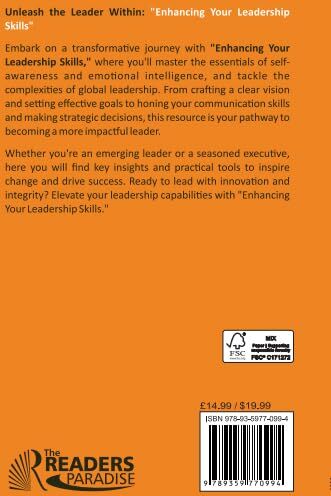
The Readers Paradise Enhancing Your Leadership Skills: A Practical Handbook for Success by Prof. V.K.Simon - Non Fiction Paperback - Leadership & Professional DevelopmentEnhance your leadership skills with this practical handbook by Prof. V.K.Simon. Written for anyone looking to lead with confidence and clarity, it blends self-awareness, emotional intelligence, and real-world strategy to help you achieve success. Whether you're a first-time manager or a seasoned executive, this compact guide delivers tools to strengthen decision-making, communication, and team impact in a fast-changing global workplace. It's built around the idea that great leadership is learned through practice, not theory alone, and covers the core competencies every effective leader needs, starting with self-awareness and emotional intelligence.2,99 £*Shipping: 2,99 £Secure redirect to the provider
-
Ludonova Coming of Age - Story-driven Development Dice Management Game - Board GameIn Coming of Age, players guide a character from childhood through adolescence, making choices that shape their interests, skills, personality, and future ambitions. Each player begins with a limited range of interests and abilities, then develops through experiences encountered during the game. Use a dice-management mechanism to decide where to go and which opportunities to pursue. Visits around the city introduce new experiences, while interactions and personal decisions influence the traits recorded on your individual player board. Along the way, you will form memories, make friends, fall in love, and learn to handle setbacks. The aim is to fulfill personal life goals by balancing development, independence, and the experiences that define your character. Parental support is important early in the journey, but your choices gradually open up new possibilities as you grow.45,99 £*Shipping: 3,95 £Secure redirect to the provider
-
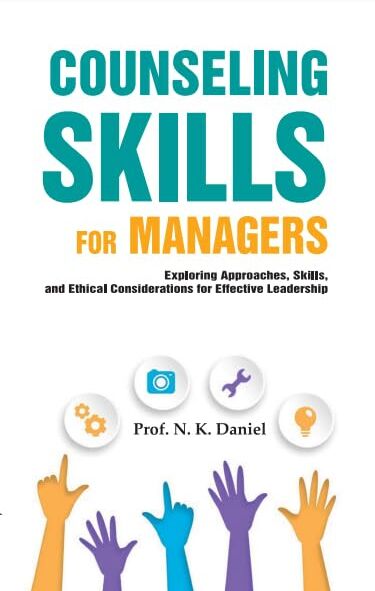
The Readers Paradise Counseling Skills For Managers by Prof. N.K. Daniel - Paperback - Leadership, Coaching & Workplace Ethics Guide for Managers and HR ProfessionalsCounseling Skills For Managers is a practical guide that helps leaders develop essential counseling skills for the workplace. Written for managers, team leads, HR professionals, and aspiring executives, it covers foundational counseling theory and its strategic application in corporate settings. The book teaches readers how to listen with empathy, structure coaching conversations, resolve role conflicts, and support colleagues through change and difficulty, all while maintaining clear ethical boundaries. This guide is a valuable addition to any professional development or leadership library, offering a unique blend of psychology and management principles in an accessible format.2,99 £*Shipping: 2,99 £Secure redirect to the provider


-
Does your mother find violence in education okay?
No, my mother does not find violence in education okay. She believes that education should be a safe and nurturing environment for students to learn and grow. She advocates for non-violent and positive disciplinary methods that focus on understanding and addressing the root causes of behavioral issues. She believes that violence has no place in education and that there are more effective and compassionate ways to address conflicts and behavioral issues in schools. **
-
What is violence?
Violence is the intentional use of physical force or power to harm, damage, or kill someone or something. It can take many forms, including physical, emotional, psychological, and verbal. Violence often results in pain, suffering, and trauma for the victim, and can have long-lasting negative effects on individuals and communities. It is a violation of human rights and is often used as a means to control, dominate, or intimidate others. **
-
Is it permissible to combat physical violence with physical violence?
While self-defense is a universally recognized right, it is important to consider the circumstances and proportionality of the response. In some cases, physical violence may be necessary to protect oneself or others from harm. However, it is important to prioritize de-escalation and seek non-violent solutions whenever possible. It is advisable to seek help from authorities or professionals trained in conflict resolution to address situations involving physical violence. **
-
What is the difference between psychological violence and physical violence?
Psychological violence involves the use of words, gestures, or actions to manipulate, control, or intimidate another person. This can include threats, humiliation, and emotional abuse. On the other hand, physical violence involves the use of physical force to cause harm or injury to another person, such as hitting, kicking, or pushing. While both forms of violence can have serious and long-lasting effects on the victim, psychological violence can be more difficult to recognize and address, as it does not leave visible scars. **


What is psychological violence?
Psychological violence refers to a form of abuse that involves the use of words, gestures, or actions to manipulate, control, or intimidate another person. It can include behaviors such as threats, humiliation, intimidation, and isolation, which can have a profound impact on a person's mental and emotional well-being. Psychological violence can be just as harmful as physical violence and can lead to long-lasting psychological trauma and emotional distress. **
What is youth violence?
Youth violence refers to harmful behaviors and actions committed by individuals who are in their teenage years or early adulthood. This type of violence can manifest in various forms, such as physical aggression, bullying, gang-related activities, and even violent crimes. Youth violence can have serious consequences for both the individuals involved and the community at large, leading to physical injuries, emotional trauma, and long-term societal impacts. It is essential to address the root causes of youth violence, such as poverty, lack of access to education and resources, and exposure to violence in the home or community, in order to prevent and reduce its occurrence. **
Top-Angebote
Products related to Violence:
-
Bloomsbury Publishing PLC The Gift of Fear: Survival Signals That Protect Us from Violence by Gavin de Becker - Non FictionTitle:. The Gift of Fear: Survival Signals That Protect Us from Violence Overview:. The Gift of Fear invites readers to trust their instincts and pay attention to what our bodies already know: when something feels off, it probably is. Gavin de Becker, a renowned security expert, draws on decades of risk assessment and real-life cases to reveal the subtle signals that precede violence and how to respond with calm, decisive action. This non-fiction guide is not a manual on paranoia; it's a practical toolkit for everyday safety that helps you distinguish genuine danger from overreaction, and to act before danger escalates. It covers common patterns used by predators, the role of situational awareness, and how to interpret cues such as abrupt changes in behavior, isolation, or a sense of being followed. The author emphasizes that fear is a protective signal, not an enemy, and offers concrete strategies to reduce risk—from intuitive boundary-setting to planning escape routes. Written in a clear, respectful voice, The Gift of Fear empowers readers to make safer choices in a world where threats can emerge suddenly, whether at work, on the street, or in intimate relationships. Throughout the book, readers will encounter memorable anecdotes that illustrate ideas without sensationalism, reinforcing a message of personal agency, practical safety, and rational decision-making. This is a vital read for anyone who wants to trust their inner alarms and stay safer in daily life. What Makes This Book Stand Out:. What sets The Gift of Fear apart is its rare blend of accessible storytelling and rigorous, practitioner-informed guidance. de Becker refuses to sensationalize danger; instead, he offers a practical framework for threat awareness that readers can apply in real time. The book trains you to listen to your instincts—the quiet sense that something isn’t right—and to test that intuition against rational assessment before acting. It provides concrete steps you can take immediately: establish clear boundaries, choose safer routes, and recognize manipulation or coercion in social and professional settings. The tone is steady and respectful, never alarmist, which makes the advice credible for a broad audience—from college students and busy parents to professionals who navigate public spaces. By translating complex risk concepts into tangible actions, the book becomes a timeless companion for anyone seeking confidence, control, and safety in everyday life. Who This Book Is Perfect For:. This book is perfect for anyone seeking practical guidance on personal safety—students commuting across campus, travellers heading to new destinations, professionals who interact with the public, and parents who want to safeguard their households. It speaks to readers who trust their instincts and want a clear method to interpret subtle signals rather than rely on fear or sensational headlines. It’s also a valuable resource for book clubs, educators, caregivers, and anyone preparing...10,99 £*Shipping: 2,99 £Secure redirect to the provider
-
John Murray Business Coaching For Performance 6th Edition: The Principles And Practice Of Coaching And Leadership - Non FictionTitle:. Coaching For Performance 6th Edition: The Principles And Practice Of Coaching And Leadership Overview:. Unlock the full potential of your team with this essential guide to professional coaching. John Whitmore’s text delivers a clear roadmap for improving results. You will learn to ask powerful questions that spark independent thinking. The pages walk you through real-world scenarios to build trust. Every chapter offers actionable steps to foster accountability. You discover how to balance high expectations with genuine support. This updated guide keeps core principles sharp for modern workplaces. It bridges the gap between theory and daily practice. You gain the tools to navigate complex conversations confidently. Your leadership journey starts with a structured path forward. This authoritative text transforms how you approach daily challenges. You stop guessing and start implementing proven methodologies. Your conversations become less stressful and far more productive. What Makes This Book Stand Out:. What sets this title apart is its laser focus on human potential. Instead of offering generic advice, it teaches you how to ignite internal motivation. The widely recognised GROW framework serves as a reliable backbone for every session. You receive concrete techniques for managing resistance at work. The writing remains direct and accessible. You get deep insight into psychological barriers that limit growth. Each lesson connects back to measurable outcomes. This approach cultivates a culture where feedback feels genuinely supportive. You keep returning to its pages for consistent leadership habits. The practical exercises help you track progress without getting bogged down. You watch reluctant employees transform into proactive problem solvers. Managing becomes easier when you shift from telling to asking. Who This Book Is Perfect For:. Managers looking to avoid micromanagement will find immediate value in these pages. Business owners apply these strategies to accelerate team productivity quickly. Human resources professionals appreciate the clear guidelines for one-to-one meetings. Aspiring life coaches benefit from the foundational psychological groundwork. Students studying organisational psychology recognize this as a crucial reference point. Anyone who guides others forward can sharpen their interpersonal skills daily. The guidance works equally well for managing remote or hybrid teams.. You do not need prior training to implement these tactics successfully. The logical structure allows you to dip in for current solutions. Corporate training coordinators frequently adopt this manual as their primary classroom resource. Senior executives use it to recalibrate boardroom dynamics and drive alignment. Key Highlights:. Empowerment Strategy: Learn to replace directives with questions that unlock employee decision-making.. GROW Framework: Master a four-step system for structuring productive development conversations.. Psychological...24,99 £*Shipping: 2,99 £Secure redirect to the provider
-
The Readers Paradise Enhancing Your Leadership Skills: A Practical Handbook for Success by Prof. V.K.Simon - Non Fiction Paperback - Leadership & Professional DevelopmentEnhance your leadership skills with this practical handbook by Prof. V.K.Simon. Written for anyone looking to lead with confidence and clarity, it blends self-awareness, emotional intelligence, and real-world strategy to help you achieve success. Whether you're a first-time manager or a seasoned executive, this compact guide delivers tools to strengthen decision-making, communication, and team impact in a fast-changing global workplace. It's built around the idea that great leadership is learned through practice, not theory alone, and covers the core competencies every effective leader needs, starting with self-awareness and emotional intelligence.2,99 £*Shipping: 2,99 £Secure redirect to the provider
-
Ludonova Coming of Age - Story-driven Development Dice Management Game - Board GameIn Coming of Age, players guide a character from childhood through adolescence, making choices that shape their interests, skills, personality, and future ambitions. Each player begins with a limited range of interests and abilities, then develops through experiences encountered during the game. Use a dice-management mechanism to decide where to go and which opportunities to pursue. Visits around the city introduce new experiences, while interactions and personal decisions influence the traits recorded on your individual player board. Along the way, you will form memories, make friends, fall in love, and learn to handle setbacks. The aim is to fulfill personal life goals by balancing development, independence, and the experiences that define your character. Parental support is important early in the journey, but your choices gradually open up new possibilities as you grow.45,99 £*Shipping: 3,95 £Secure redirect to the provider
-
What are personal violence, cultural violence, and structural violence?
Personal violence refers to physical, emotional, or psychological harm inflicted on an individual by another person. Cultural violence refers to the ways in which cultural beliefs, norms, and practices perpetuate violence and discrimination within a society. Structural violence refers to the systemic ways in which social, political, and economic structures create and perpetuate inequalities and injustices that harm individuals and communities. Together, these forms of violence intersect and contribute to the perpetuation of harm and oppression in society. **
-
Doesn't violence belong to the development of a person?
Violence does not inherently belong to the development of a person. While some individuals may experience or witness violence in their lives, it is not a necessary or positive aspect of personal growth. Healthy development involves learning empathy, communication skills, conflict resolution, and non-violent ways of expressing emotions. Encouraging peaceful and respectful interactions can lead to a more well-rounded and emotionally intelligent individual. **
-
Does your mother find violence in education okay?
No, my mother does not find violence in education okay. She believes that education should be a safe and nurturing environment for students to learn and grow. She advocates for non-violent and positive disciplinary methods that focus on understanding and addressing the root causes of behavioral issues. She believes that violence has no place in education and that there are more effective and compassionate ways to address conflicts and behavioral issues in schools. **
-
What is violence?
Violence is the intentional use of physical force or power to harm, damage, or kill someone or something. It can take many forms, including physical, emotional, psychological, and verbal. Violence often results in pain, suffering, and trauma for the victim, and can have long-lasting negative effects on individuals and communities. It is a violation of human rights and is often used as a means to control, dominate, or intimidate others. **
Similar search terms for Violence
-
The Readers Paradise Counseling Skills For Managers by Prof. N.K. Daniel - Paperback - Leadership, Coaching & Workplace Ethics Guide for Managers and HR ProfessionalsCounseling Skills For Managers is a practical guide that helps leaders develop essential counseling skills for the workplace. Written for managers, team leads, HR professionals, and aspiring executives, it covers foundational counseling theory and its strategic application in corporate settings. The book teaches readers how to listen with empathy, structure coaching conversations, resolve role conflicts, and support colleagues through change and difficulty, all while maintaining clear ethical boundaries. This guide is a valuable addition to any professional development or leadership library, offering a unique blend of psychology and management principles in an accessible format.2,99 £*Shipping: 2,99 £Secure redirect to the provider
-
Various Publishers How to Talk to Anyone, Next Conversation & Psychology of Management - 3 Book Paperback Set - Communication, Leadership & Management PsychologyThis 3-book collection set brings together three practical, people-focused reads for anyone who wants to communicate better and lead more effectively. Leil Lowndes' classic 'How to Talk to Anyone' pairs with Jefferson Fisher's 'Next Conversation' and a foundational 'Psychology of Management' title to cover everyday conversation, conflict resolution, and workplace psychology in one bundle. Whether you are prepping for interviews, managing a team, or simply want to feel more confident in social situations, this paperback set offers accessible, actionable guidance you can start using immediately. The set includes 'How to Talk to Anyone' by Leil Lowndes, 'Next Conversation' by Jefferson Fisher, and 'Psychology of Management'.20,99 £*Shipping: 2,99 £Secure redirect to the provider
-
Is it permissible to combat physical violence with physical violence?
While self-defense is a universally recognized right, it is important to consider the circumstances and proportionality of the response. In some cases, physical violence may be necessary to protect oneself or others from harm. However, it is important to prioritize de-escalation and seek non-violent solutions whenever possible. It is advisable to seek help from authorities or professionals trained in conflict resolution to address situations involving physical violence. **
-
What is the difference between psychological violence and physical violence?
Psychological violence involves the use of words, gestures, or actions to manipulate, control, or intimidate another person. This can include threats, humiliation, and emotional abuse. On the other hand, physical violence involves the use of physical force to cause harm or injury to another person, such as hitting, kicking, or pushing. While both forms of violence can have serious and long-lasting effects on the victim, psychological violence can be more difficult to recognize and address, as it does not leave visible scars. **
-
What is psychological violence?
Psychological violence refers to a form of abuse that involves the use of words, gestures, or actions to manipulate, control, or intimidate another person. It can include behaviors such as threats, humiliation, intimidation, and isolation, which can have a profound impact on a person's mental and emotional well-being. Psychological violence can be just as harmful as physical violence and can lead to long-lasting psychological trauma and emotional distress. **
-
What is youth violence?
Youth violence refers to harmful behaviors and actions committed by individuals who are in their teenage years or early adulthood. This type of violence can manifest in various forms, such as physical aggression, bullying, gang-related activities, and even violent crimes. Youth violence can have serious consequences for both the individuals involved and the community at large, leading to physical injuries, emotional trauma, and long-term societal impacts. It is essential to address the root causes of youth violence, such as poverty, lack of access to education and resources, and exposure to violence in the home or community, in order to prevent and reduce its occurrence. **
* All prices are inclusive of VAT and, if applicable, plus shipping costs. The offer information is based on the details provided by the respective shop and is updated through automated processes. Real-time updates do not occur, so deviations can occur in individual cases. ** Note: Parts of this content were created by AI.