Buy aefca.eu ?
We are moving the project
aefca.eu .
Are you interested in purchasing the domain
aefca.eu ?
domain@kv-gmbh.de · 0541-91531010
Buy aefca.eu ?
What does development aid look like in developing countries?
Development aid in developing countries can take many forms, including financial assistance, technical support, capacity building, and infrastructure development. It is often provided by governments, international organizations, and non-governmental organizations with the goal of promoting economic growth, reducing poverty, improving healthcare and education, and addressing social and environmental challenges. Development aid can be targeted towards specific sectors such as agriculture, healthcare, education, and infrastructure, and can also include support for governance and institutional strengthening. The effectiveness of development aid can vary depending on the approach, coordination with local governments and communities, and the sustainability of the projects. **
Which countries are Balkan countries?
The Balkan countries are located in the southeastern region of Europe and include Albania, Bosnia and Herzegovina, Bulgaria, Croatia, Greece, Kosovo, Montenegro, North Macedonia, Romania, Serbia, and Slovenia. These countries are characterized by their diverse cultures, histories, and landscapes, and are often considered a bridge between the East and the West. The term "Balkan" is derived from the Balkan Mountains, which run through the region. **


Similar search terms for Countries
Top-Angebote
Products related to Countries:
-
Multisell Products Hub Small Automatic Cigarette Rolling Machine, Fully Automatic Household Cigarette Rolling Machine For Multiple Countries redEffortless Cigarette Rolling at Home Experience the convenience of the Fully Automatic Household Cigarette Rolling Machine. Designed for individuals who enjoy rolling their own cigarettes, this machine provides a hasslefree and efficient way to...39,97 $*Shipping: 0,00 $Secure redirect to the provider
-
Ray Dalio , Patrick Rayne, Bruce Hood How Countries Go Broke, The One Goal, The Science of Happiness 3 Books Collection SetDescription. Condition: BRAND NEW. Format: Mixed Lot. How Countries Go Broke [Hardcover]:. In this groundbreaking book, Ray Dalio, one of the greatest investors of our time who anticipated the 2008 global financial crisis and the 2010–12 European debt crisis, shares for the first time his detailed explanation of what he calls the 'Big Debt Cycle'. Understanding this cycle is critical for helping policymakers, investors and the general public grasp where we are and where we are headed with the debt issue. Dalio's model points toward surprisingly straightforward solutions for dealing with the debt problems that the US, Europe, Japan and China face today.. The One Goal:. Do you ever feel overwhelmed by your to-do list, constantly busy but getting nowhere? The One Goal is your antidote to modern overload — a practical, no-fluff guide that shows how simplifying your focus can supercharge your success.* What You’ll Learn:✅ The Power of Singular Focus: Discover why chasing too many goals leads to burnout — and how zeroing in on one transforms your results.✅ Declutter Your Mind & Schedule: Learn how to cut out distractions, eliminate mental noise, and create space for deep work.. The Science of Happiness:. We all want to be happier, but our brains often get in the way. When we’re too stuck in our heads we obsess over our inadequacies, compare ourselves with others and fail to see the good in our lives.In The Science of Happiness, world-leading psychologist and happiness expert Bruce Hood demonstrates that the key to happiness is not self-care but connection. He presents seven simple but life-changing lessons to break negative thought patterns and re-connect with the things that really matter.. Title. How Countries Go Broke, The One Goal, The Science of Happiness 3 Books Collection Set. Delivery. Content. Reviews27,99 £*Shipping: 2,99 £Secure redirect to the provider
-
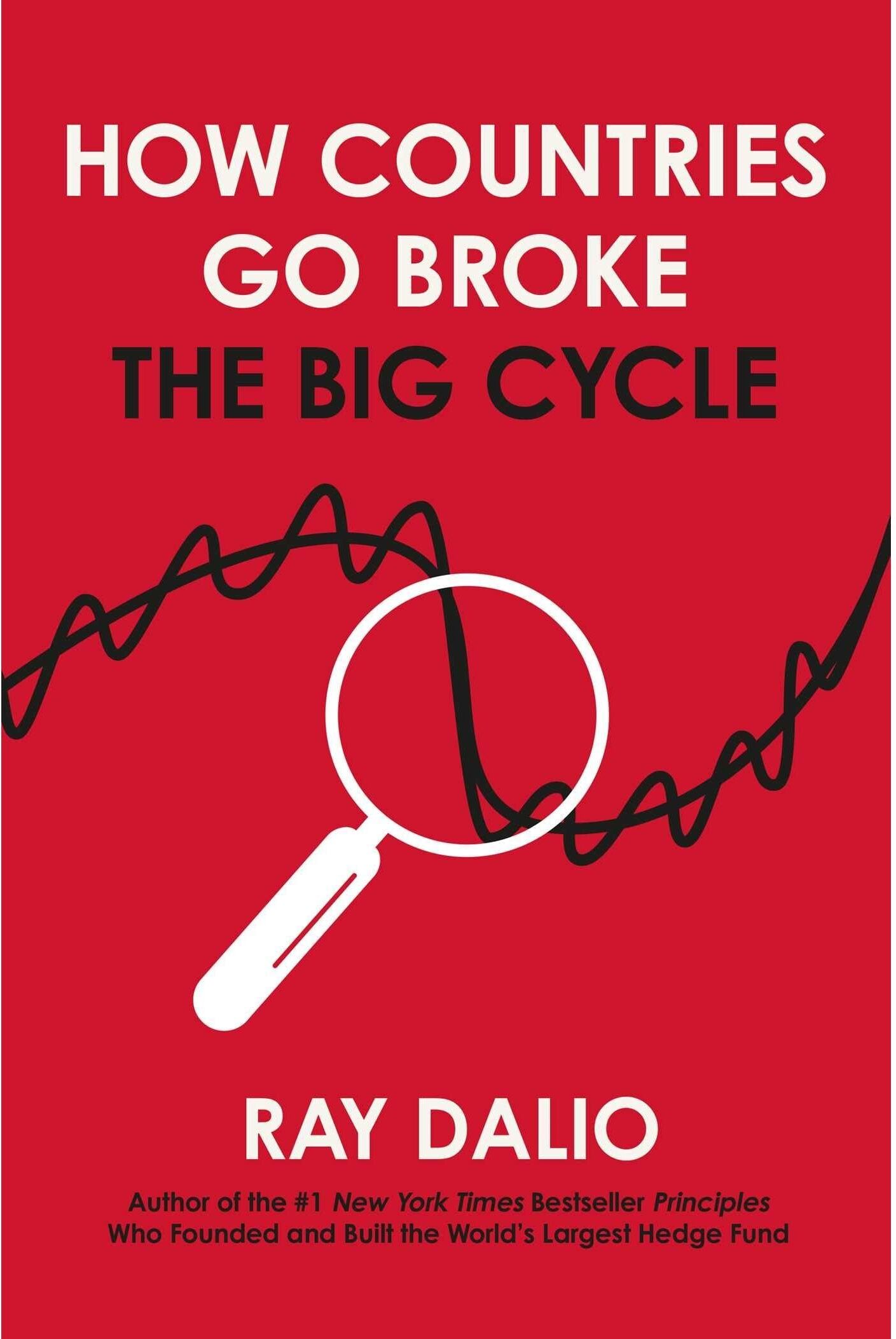
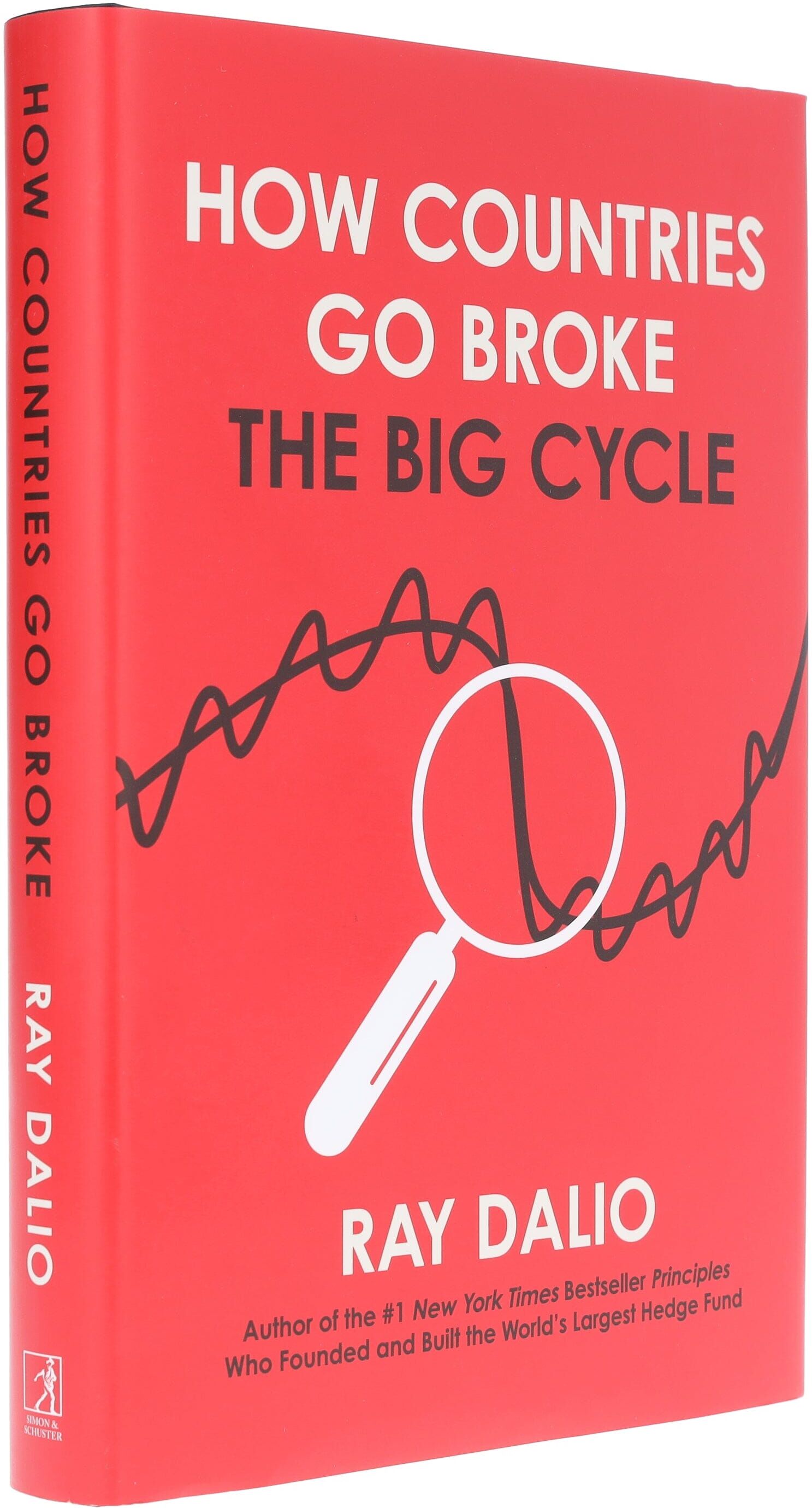
Simon and Schuster UK How Countries Go Broke: Principles for Navigating the Big Debt Cycle, Where We Are Headed, and What We Should DoAn urgent warning about the global economy from Ray Dalio, the #1 New York Times bestselling author of Principles. Do big government debts threaten our collective well-being? Are there limits to debt growth? Can a big, important reserve currency country like the United States really go broke – and what would that look like? For decades, politicians, policymakers and investors have debated these questions, but the answers have eluded them. In this groundbreaking book, Ray Dalio, one of the greatest investors of our time who anticipated the 2008 global financial crisis and the 2010–12 European debt crisis, shares for the first time his detailed explanation of what he calls the 'Big Debt Cycle'. Understanding this cycle is critical for helping policymakers, investors and the general public grasp where we are and where we are headed with the debt issue. Dalio's model points toward surprisingly straightforward solutions for dealing with the debt problems that the US, Europe, Japan and China face today. How Countries Go Broke also shows how these debt problems are related to the other forces – political within countries, geopolitical between countries, natural (droughts, floods and pandemics) and technological (most importantly, AI) – that together are causing what Dalio calls the 'Overall Big Cycle' changes in the world order. By reading this book, you will improve your understanding of what's happening now and what to do about it.17,99 £*Shipping: 2,99 £Secure redirect to the provider
-
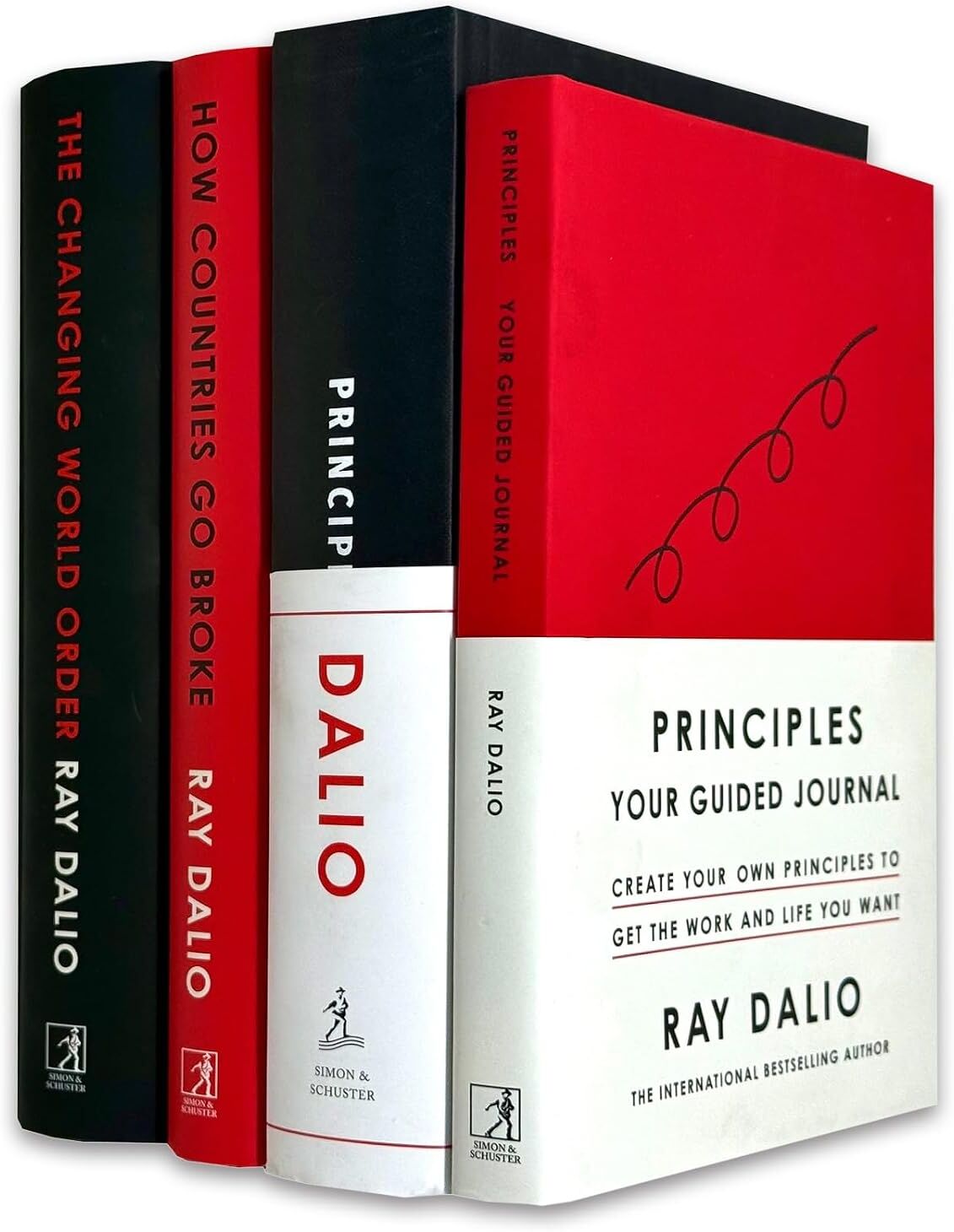
Ray Dalio Collection (Principles: Life and Work, The Changing World Order, How Countries Go Broke & Guided Journal) 4 Books Set - Non Fiction - Hardback Simon & SchusterTitles in this Set: 1. Principles: Life and Work 2. Principles for Dealing with the Changing World Order 3. How Countries Go Broke: The Big Cycle 4. Principles: Your Guided Journal Description: Principles: Life and Work In 1975, Ray Dalio founded an investment firm, Bridgewater Associates, out of his two-bedroom apartment in New York City. Forty years later, Bridgewater has made more money for its clients than any other hedge fund in history and grown into the fifth most important private company in the United States, according to Fortune magazine. Dalio himself has been named to Time magazine’s list of the 100 most influential people in the world. Along the way, Dalio discovered a set of unique principles that have led to Bridgewater’s exceptionally effective culture, which he describes as “an idea meritocracy that strives to achieve meaningful work and meaningful relationships through radical transparency.” It is these principles, and not anything special about Dalio—who grew up an ordinary kid in a middle-class Long Island neighborhood—that he believes are the reason behind his success. In Principles, Dalio shares what he’s learned over the course of his remarkable career. He argues that life, management, economics, and investing can all be systemized into rules and understood like machines. The book’s hundreds of practical lessons, which are built around his cornerstones of “radical truth” and “radical transparency,” include Dalio laying out the most effective ways for individuals and organizations to make decisions, approach challenges, and build strong teams. He also describes the innovative tools the firm uses to bring an idea meritocracy to life, such as creating “baseball cards” for all employees that distill their strengths and weaknesses, and employing computerized decision-making systems to make believability-weighted decisions. While the book brims with novel ideas for organizations and institutions, Principles also offers a clear, straightforward approach to decision-making that Dalio believes anyone can apply, no matter what they’re seeking to achieve. Principles for Dealing with the Changing World Order A few years ago, Ray Dalio noticed a confluence of political and economic conditions he hadn’t encountered before. They included huge debts and zero or near-zero interest rates that led to massive printing of money in the world’s three major reserve currencies; big political and social conflicts within countries, especially the US, due to the largest wealth, political and values disparities in more than 100 years; and the rising of a world power (China) to challenge the existing world power (US) and the existing world order. The last time that this confluence occurred was between 1930 and 1945. This realisation sent Dalio on a search for the repeating patterns and cause/effect relationships underlying all major changes in wealth and power over the last 500 years. In this remarkable and timely addition to his Principles series,...35,99 £*Shipping: 0,00 £Secure redirect to the provider


-
Which Balkan countries are Islamic countries?
The Balkan countries with a significant Muslim population are Albania, Bosnia and Herzegovina, and Kosovo. These countries have a long history of Islamic influence and have a majority Muslim population. Islam has played a significant role in shaping the culture, traditions, and architecture of these countries. While other Balkan countries also have Muslim communities, these three countries are considered Islamic countries due to their majority Muslim population. **
-
Why do countries with higher education have lower religiosity?
Countries with higher education tend to have lower religiosity because education often encourages critical thinking, questioning of beliefs, and exposure to diverse perspectives. As individuals become more educated, they may be more likely to rely on scientific explanations rather than religious ones. Additionally, higher education can provide individuals with a sense of empowerment and self-reliance, leading them to rely less on religious institutions for guidance and support. Ultimately, the correlation between higher education and lower religiosity may be attributed to the emphasis on rationality, evidence-based reasoning, and individual autonomy that comes with education. **
-
What are industrialized countries and developing countries?
Industrialized countries are those that have advanced infrastructure, technology, and high levels of income and standard of living. These countries have highly developed economies and industries, and typically have a high level of urbanization and access to modern amenities. Developing countries, on the other hand, are those that are still in the process of industrialization and have lower levels of income and standard of living. These countries often have less advanced infrastructure and technology, and may have a higher proportion of their population engaged in agriculture. Developing countries are working towards improving their economic and social conditions to reach the level of industrialized countries. **
-
European countries
European countries are nations located on the continent of Europe. There are 44 countries in Europe, each with its own unique culture, history, and language. Many European countries are members of the European Union, which promotes economic and political cooperation among its members. European countries are known for their rich cultural heritage, diverse landscapes, and high standard of living. **
Neighboring countries
Neighboring countries are countries that share a common border or are geographically close to each other. These countries often have cultural, economic, and political ties due to their proximity. Neighboring countries frequently engage in trade, travel, and diplomatic relations to foster cooperation and mutual understanding. However, disputes over borders, resources, or historical conflicts can also arise between neighboring countries. **
'Neighboring countries'
Neighboring countries are countries that share a border with each other. These countries often have close geographical, cultural, and economic ties due to their proximity. Neighboring countries may have agreements in place to facilitate trade, travel, and cooperation on various issues. It is important for neighboring countries to maintain good relations in order to promote peace and stability in the region. **
Top-Angebote
Products related to Countries:
-
Regula Ysewijn Dark Rye and Honey Cake: Festival baking from the heart of the Low CountriesDescription. From the heart of the Low Countries of northwestern Europe, Belgium has long forged a distinctive culinary identity through its seasonal feasts and festivals. In this follow-up to her internationally lauded Pride and Pudding and Oats in the North, Wheat from the South, Regula Ysewijn turns her attention to the baking traditions of this unique country – the place of her birth.. Title. Dark Rye and Honey Cake: Festival baking from the heart of the Low Countries. Delivery. Content. Reviews99,99 £*Shipping: 0,00 £Secure redirect to the provider
-
John Murray Business Coaching For Performance 6th Edition: The Principles And Practice Of Coaching And Leadership - Non FictionTitle:. Coaching For Performance 6th Edition: The Principles And Practice Of Coaching And Leadership Overview:. Unlock the full potential of your team with this essential guide to professional coaching. John Whitmore’s text delivers a clear roadmap for improving results. You will learn to ask powerful questions that spark independent thinking. The pages walk you through real-world scenarios to build trust. Every chapter offers actionable steps to foster accountability. You discover how to balance high expectations with genuine support. This updated guide keeps core principles sharp for modern workplaces. It bridges the gap between theory and daily practice. You gain the tools to navigate complex conversations confidently. Your leadership journey starts with a structured path forward. This authoritative text transforms how you approach daily challenges. You stop guessing and start implementing proven methodologies. Your conversations become less stressful and far more productive. What Makes This Book Stand Out:. What sets this title apart is its laser focus on human potential. Instead of offering generic advice, it teaches you how to ignite internal motivation. The widely recognised GROW framework serves as a reliable backbone for every session. You receive concrete techniques for managing resistance at work. The writing remains direct and accessible. You get deep insight into psychological barriers that limit growth. Each lesson connects back to measurable outcomes. This approach cultivates a culture where feedback feels genuinely supportive. You keep returning to its pages for consistent leadership habits. The practical exercises help you track progress without getting bogged down. You watch reluctant employees transform into proactive problem solvers. Managing becomes easier when you shift from telling to asking. Who This Book Is Perfect For:. Managers looking to avoid micromanagement will find immediate value in these pages. Business owners apply these strategies to accelerate team productivity quickly. Human resources professionals appreciate the clear guidelines for one-to-one meetings. Aspiring life coaches benefit from the foundational psychological groundwork. Students studying organisational psychology recognize this as a crucial reference point. Anyone who guides others forward can sharpen their interpersonal skills daily. The guidance works equally well for managing remote or hybrid teams.. You do not need prior training to implement these tactics successfully. The logical structure allows you to dip in for current solutions. Corporate training coordinators frequently adopt this manual as their primary classroom resource. Senior executives use it to recalibrate boardroom dynamics and drive alignment. Key Highlights:. Empowerment Strategy: Learn to replace directives with questions that unlock employee decision-making.. GROW Framework: Master a four-step system for structuring productive development conversations.. Psychological...24,99 £*Shipping: 2,99 £Secure redirect to the provider
-
Multisell Products Hub Small Automatic Cigarette Rolling Machine, Fully Automatic Household Cigarette Rolling Machine For Multiple Countries redEffortless Cigarette Rolling at Home Experience the convenience of the Fully Automatic Household Cigarette Rolling Machine. Designed for individuals who enjoy rolling their own cigarettes, this machine provides a hasslefree and efficient way to...39,97 $*Shipping: 0,00 $Secure redirect to the provider
-
Ray Dalio , Patrick Rayne, Bruce Hood How Countries Go Broke, The One Goal, The Science of Happiness 3 Books Collection SetDescription. Condition: BRAND NEW. Format: Mixed Lot. How Countries Go Broke [Hardcover]:. In this groundbreaking book, Ray Dalio, one of the greatest investors of our time who anticipated the 2008 global financial crisis and the 2010–12 European debt crisis, shares for the first time his detailed explanation of what he calls the 'Big Debt Cycle'. Understanding this cycle is critical for helping policymakers, investors and the general public grasp where we are and where we are headed with the debt issue. Dalio's model points toward surprisingly straightforward solutions for dealing with the debt problems that the US, Europe, Japan and China face today.. The One Goal:. Do you ever feel overwhelmed by your to-do list, constantly busy but getting nowhere? The One Goal is your antidote to modern overload — a practical, no-fluff guide that shows how simplifying your focus can supercharge your success.* What You’ll Learn:✅ The Power of Singular Focus: Discover why chasing too many goals leads to burnout — and how zeroing in on one transforms your results.✅ Declutter Your Mind & Schedule: Learn how to cut out distractions, eliminate mental noise, and create space for deep work.. The Science of Happiness:. We all want to be happier, but our brains often get in the way. When we’re too stuck in our heads we obsess over our inadequacies, compare ourselves with others and fail to see the good in our lives.In The Science of Happiness, world-leading psychologist and happiness expert Bruce Hood demonstrates that the key to happiness is not self-care but connection. He presents seven simple but life-changing lessons to break negative thought patterns and re-connect with the things that really matter.. Title. How Countries Go Broke, The One Goal, The Science of Happiness 3 Books Collection Set. Delivery. Content. Reviews27,99 £*Shipping: 2,99 £Secure redirect to the provider
-
What does development aid look like in developing countries?
Development aid in developing countries can take many forms, including financial assistance, technical support, capacity building, and infrastructure development. It is often provided by governments, international organizations, and non-governmental organizations with the goal of promoting economic growth, reducing poverty, improving healthcare and education, and addressing social and environmental challenges. Development aid can be targeted towards specific sectors such as agriculture, healthcare, education, and infrastructure, and can also include support for governance and institutional strengthening. The effectiveness of development aid can vary depending on the approach, coordination with local governments and communities, and the sustainability of the projects. **
-
Which countries are Balkan countries?
The Balkan countries are located in the southeastern region of Europe and include Albania, Bosnia and Herzegovina, Bulgaria, Croatia, Greece, Kosovo, Montenegro, North Macedonia, Romania, Serbia, and Slovenia. These countries are characterized by their diverse cultures, histories, and landscapes, and are often considered a bridge between the East and the West. The term "Balkan" is derived from the Balkan Mountains, which run through the region. **
-
Which Balkan countries are Islamic countries?
The Balkan countries with a significant Muslim population are Albania, Bosnia and Herzegovina, and Kosovo. These countries have a long history of Islamic influence and have a majority Muslim population. Islam has played a significant role in shaping the culture, traditions, and architecture of these countries. While other Balkan countries also have Muslim communities, these three countries are considered Islamic countries due to their majority Muslim population. **
-
Why do countries with higher education have lower religiosity?
Countries with higher education tend to have lower religiosity because education often encourages critical thinking, questioning of beliefs, and exposure to diverse perspectives. As individuals become more educated, they may be more likely to rely on scientific explanations rather than religious ones. Additionally, higher education can provide individuals with a sense of empowerment and self-reliance, leading them to rely less on religious institutions for guidance and support. Ultimately, the correlation between higher education and lower religiosity may be attributed to the emphasis on rationality, evidence-based reasoning, and individual autonomy that comes with education. **
Similar search terms for Countries
-
Simon and Schuster UK How Countries Go Broke: Principles for Navigating the Big Debt Cycle, Where We Are Headed, and What We Should DoAn urgent warning about the global economy from Ray Dalio, the #1 New York Times bestselling author of Principles. Do big government debts threaten our collective well-being? Are there limits to debt growth? Can a big, important reserve currency country like the United States really go broke – and what would that look like? For decades, politicians, policymakers and investors have debated these questions, but the answers have eluded them. In this groundbreaking book, Ray Dalio, one of the greatest investors of our time who anticipated the 2008 global financial crisis and the 2010–12 European debt crisis, shares for the first time his detailed explanation of what he calls the 'Big Debt Cycle'. Understanding this cycle is critical for helping policymakers, investors and the general public grasp where we are and where we are headed with the debt issue. Dalio's model points toward surprisingly straightforward solutions for dealing with the debt problems that the US, Europe, Japan and China face today. How Countries Go Broke also shows how these debt problems are related to the other forces – political within countries, geopolitical between countries, natural (droughts, floods and pandemics) and technological (most importantly, AI) – that together are causing what Dalio calls the 'Overall Big Cycle' changes in the world order. By reading this book, you will improve your understanding of what's happening now and what to do about it.17,99 £*Shipping: 2,99 £Secure redirect to the provider
-
Ray Dalio Collection (Principles: Life and Work, The Changing World Order, How Countries Go Broke & Guided Journal) 4 Books Set - Non Fiction - Hardback Simon & SchusterTitles in this Set: 1. Principles: Life and Work 2. Principles for Dealing with the Changing World Order 3. How Countries Go Broke: The Big Cycle 4. Principles: Your Guided Journal Description: Principles: Life and Work In 1975, Ray Dalio founded an investment firm, Bridgewater Associates, out of his two-bedroom apartment in New York City. Forty years later, Bridgewater has made more money for its clients than any other hedge fund in history and grown into the fifth most important private company in the United States, according to Fortune magazine. Dalio himself has been named to Time magazine’s list of the 100 most influential people in the world. Along the way, Dalio discovered a set of unique principles that have led to Bridgewater’s exceptionally effective culture, which he describes as “an idea meritocracy that strives to achieve meaningful work and meaningful relationships through radical transparency.” It is these principles, and not anything special about Dalio—who grew up an ordinary kid in a middle-class Long Island neighborhood—that he believes are the reason behind his success. In Principles, Dalio shares what he’s learned over the course of his remarkable career. He argues that life, management, economics, and investing can all be systemized into rules and understood like machines. The book’s hundreds of practical lessons, which are built around his cornerstones of “radical truth” and “radical transparency,” include Dalio laying out the most effective ways for individuals and organizations to make decisions, approach challenges, and build strong teams. He also describes the innovative tools the firm uses to bring an idea meritocracy to life, such as creating “baseball cards” for all employees that distill their strengths and weaknesses, and employing computerized decision-making systems to make believability-weighted decisions. While the book brims with novel ideas for organizations and institutions, Principles also offers a clear, straightforward approach to decision-making that Dalio believes anyone can apply, no matter what they’re seeking to achieve. Principles for Dealing with the Changing World Order A few years ago, Ray Dalio noticed a confluence of political and economic conditions he hadn’t encountered before. They included huge debts and zero or near-zero interest rates that led to massive printing of money in the world’s three major reserve currencies; big political and social conflicts within countries, especially the US, due to the largest wealth, political and values disparities in more than 100 years; and the rising of a world power (China) to challenge the existing world power (US) and the existing world order. The last time that this confluence occurred was between 1930 and 1945. This realisation sent Dalio on a search for the repeating patterns and cause/effect relationships underlying all major changes in wealth and power over the last 500 years. In this remarkable and timely addition to his Principles series,...35,99 £*Shipping: 0,00 £Secure redirect to the provider
-
The Readers Paradise Enhancing Your Leadership Skills: A Practical Handbook for Success by Prof. V.K.Simon - Non Fiction Paperback - Leadership & Professional DevelopmentEnhance your leadership skills with this practical handbook by Prof. V.K.Simon. Written for anyone looking to lead with confidence and clarity, it blends self-awareness, emotional intelligence, and real-world strategy to help you achieve success. Whether you're a first-time manager or a seasoned executive, this compact guide delivers tools to strengthen decision-making, communication, and team impact in a fast-changing global workplace. It's built around the idea that great leadership is learned through practice, not theory alone, and covers the core competencies every effective leader needs, starting with self-awareness and emotional intelligence.2,99 £*Shipping: 2,99 £Secure redirect to the provider
-
How Countries Go Broke Principles for Navigating the Big Debt Cycle, Where We Are Headed, and What We Should Do by Ray Dalio - Non Fiction - Hardback Simon & SchusterDo big government debts threaten our collective well-being? Are there limits to debt growth? Can a big, important reserve currency country like the United States really go broke – and what would that look like? For decades, politicians, policymakers and investors have debated these questions, but the answers have eluded them. In this groundbreaking book, Ray Dalio, one of the greatest investors of our time who anticipated the 2008 global financial crisis and the 2010–12 European debt crisis, shares for the first time his detailed explanation of what he calls the 'Big Debt Cycle'. Understanding this cycle is critical for helping policymakers, investors and the general public grasp where we are and where we are headed with the debt issue. Dalio's model points toward surprisingly straightforward solutions for dealing with the debt problems that the US, Europe, Japan and China face today. How Countries Go Broke also shows how these debt problems are related to the other forces – political within countries, geopolitical between countries, natural (droughts, floods and pandemics) and technological (most importantly, AI) – that together are causing what Dalio calls the 'Overall Big Cycle' changes in the world order. By reading this book, you will improve your understanding of what's happening now and what to do about it.15,99 £*Shipping: 2,99 £Secure redirect to the provider
-
What are industrialized countries and developing countries?
Industrialized countries are those that have advanced infrastructure, technology, and high levels of income and standard of living. These countries have highly developed economies and industries, and typically have a high level of urbanization and access to modern amenities. Developing countries, on the other hand, are those that are still in the process of industrialization and have lower levels of income and standard of living. These countries often have less advanced infrastructure and technology, and may have a higher proportion of their population engaged in agriculture. Developing countries are working towards improving their economic and social conditions to reach the level of industrialized countries. **
-
European countries
European countries are nations located on the continent of Europe. There are 44 countries in Europe, each with its own unique culture, history, and language. Many European countries are members of the European Union, which promotes economic and political cooperation among its members. European countries are known for their rich cultural heritage, diverse landscapes, and high standard of living. **
-
Neighboring countries
Neighboring countries are countries that share a common border or are geographically close to each other. These countries often have cultural, economic, and political ties due to their proximity. Neighboring countries frequently engage in trade, travel, and diplomatic relations to foster cooperation and mutual understanding. However, disputes over borders, resources, or historical conflicts can also arise between neighboring countries. **
-
'Neighboring countries'
Neighboring countries are countries that share a border with each other. These countries often have close geographical, cultural, and economic ties due to their proximity. Neighboring countries may have agreements in place to facilitate trade, travel, and cooperation on various issues. It is important for neighboring countries to maintain good relations in order to promote peace and stability in the region. **
* All prices are inclusive of VAT and, if applicable, plus shipping costs. The offer information is based on the details provided by the respective shop and is updated through automated processes. Real-time updates do not occur, so deviations can occur in individual cases. ** Note: Parts of this content were created by AI.